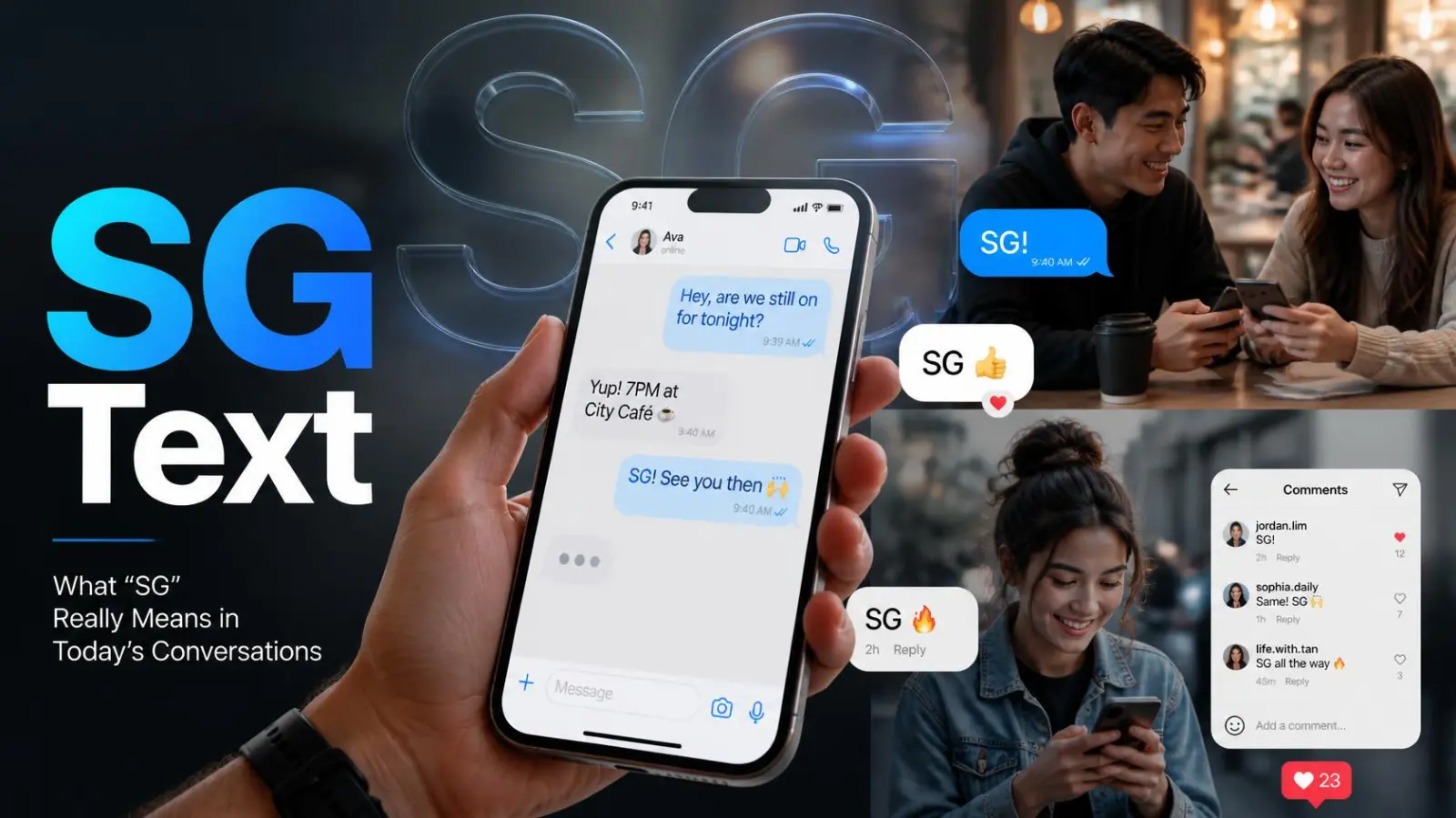
You text a friend about weekend plans, and their reply comes back: “SG.” No follow-up, no punctuation, just two letters. If you’ve paused trying to figure out whether that’s agreement, a location, or something else entirely, you’re definitely not alone.
SG text messages show up constantly in everyday conversations, and the abbreviation carries more range than most people realize. In casual texting, SG almost always means “Sounds Good,” a fast way to confirm plans or agree with a suggestion. But SG isn’t locked to just one meaning. In travel posts, bios, and location-based conversations, it frequently stands for Singapore instead.
This guide breaks down everything you need to know about SG in text messages: the most common meanings ranked by popularity, how it’s used across different messaging platforms and social media apps, realistic conversation examples, and tips for figuring out exactly which meaning applies when you see it. By the end, you’ll never have to guess at those two letters again.
What Does SG Mean in Text? (Quick Answer)
SG most commonly means “Sounds Good” in text messages, used to confirm agreement with a plan, suggestion, or idea. It’s a quick, casual way of saying “okay” or “that works for me.” Outside of texting, SG frequently stands for Singapore, especially in travel, social media bios, and location-related conversations.
Understanding SG Text Messages
The core appeal of SG comes down to speed. Texting culture has always rewarded short, efficient replies, and “Sounds Good” is already a common phrase that gets typed constantly throughout the day. Shortening it to two letters saves time without losing the message’s meaning.
“The movie starts at 7, want to grab dinner first?” “SG, see you at 6”
This kind of exchange happens constantly across group chats, one-on-one conversations, and even professional messaging apps, wherever quick confirmation matters more than a fully typed-out sentence.
Why SG Became Common in Texting
Shortened agreement phrases have existed in texting for years, but SG specifically gained traction because it’s easy to type, instantly recognizable among frequent texters, and versatile enough to fit almost any casual conversation about plans or suggestions.
SG’s Meanings, Ranked by How Often They Appear
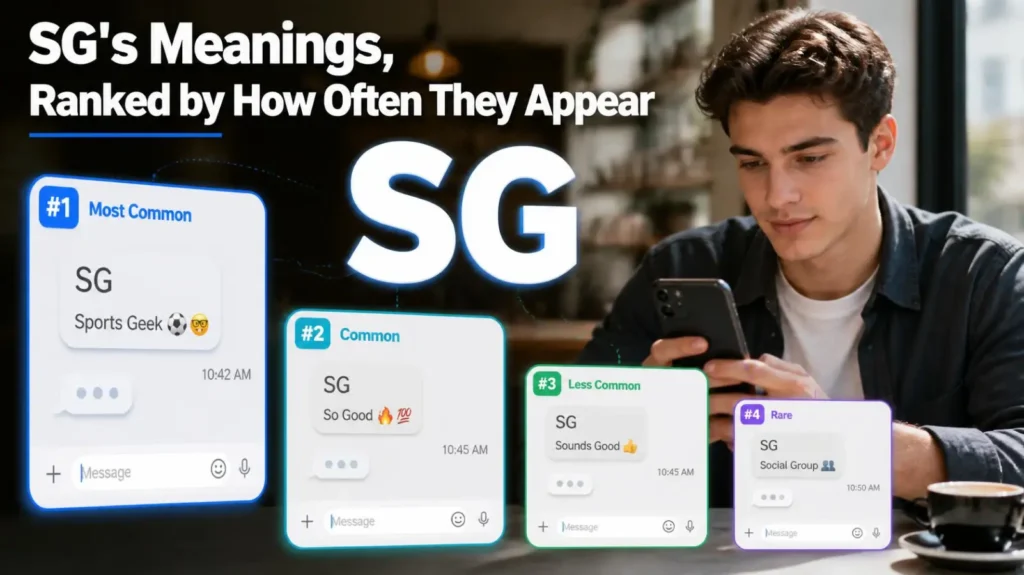
Because SG carries more than one real meaning, ranking them by frequency helps clarify which one applies in a given text.
1. Sounds Good (Most Common in Texting)
The dominant meaning in casual text messages, used to confirm or agree with something.
“Let’s push the meeting to 3pm” “SG, works better for me anyway”
2. Singapore (Common Outside of Casual Texting)
Frequently used as a location abbreviation in travel plans, business contexts, and social media bios.
“Landing in SG next Tuesday, can’t wait”
3. So Good (Less Common, Expressive Use)
Occasionally used to express enjoyment rather than agreement.
“That new restaurant was SG, we’re definitely going back”
4. Some Guy / Some Girl (Casual Storytelling Use)
Sometimes used in casual recaps when the identity of a person isn’t important to the story.
“SG at the gym wouldn’t stop talking during my workout”
Expert Note: In text messages specifically, “Sounds Good” dominates by a wide margin. The other meanings tend to show up more in social media captions, bios, or spoken-style storytelling texts rather than direct plan confirmations.
How SG Text Messages Show Up in Different Situations
SG When Confirming Plans
This is the single most common way SG appears in everyday texting, used to lock in a time, place, or idea without over-explaining.
“I’ll pick you up at 8” “SG”
SG in Group Chats
In group texts, SG often appears as a quick way to agree with a suggestion someone else made, keeping the conversation moving without unnecessary typing.
“Should we do pizza tonight?” “SG” “SG works for me too”
SG in Professional or Work Texts
In casual workplace messaging, especially instant messaging tools like Slack or Teams, SG sometimes confirms a task, meeting time, or suggestion, though it’s best kept to relaxed internal conversations rather than formal client communication.
“Let’s move the call to 2pm” “SG, I’ll update the invite”
SG in Dating Text Messages
In dating conversations, SG usually keeps its core meaning, confirming a suggested date, time, or plan in a casual, low-pressure way.
“Dinner Friday sound good?” “SG, can’t wait”
SG as a Location Reference in Texts
When SG shows up in a travel-related text, it almost always refers to Singapore rather than the “Sounds Good” meaning.
“Just landed SG, jet lag is real”
SG Across Social Media and Messaging Platforms
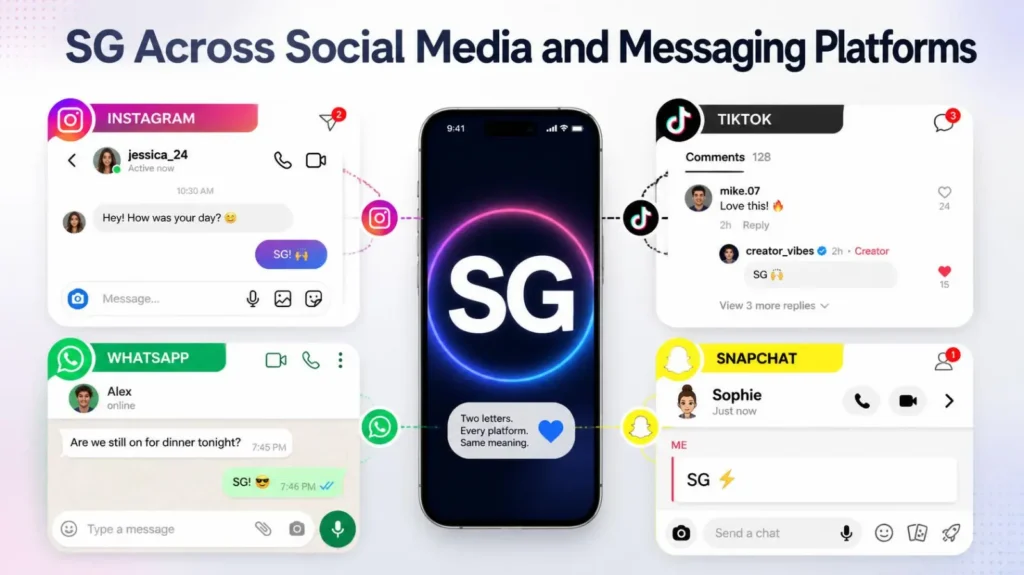
SG on Snapchat
Snapchat’s fast, casual chat style makes SG a natural fit for quickly confirming plans between friends.
SG on Instagram
On Instagram, SG appears in comments meaning “Sounds Good,” while also showing up in bios and captions referencing Singapore.
Comment: “This sounds amazing, SG on the plan!”
SG on TikTok
TikTok comment sections often use SG the same way as texting, agreeing quickly with a suggestion made in a video or another comment.
SG on Discord and in Gaming Chats
In gaming conversations, SG frequently confirms strategy or plans between teammates, functioning the same way it does in everyday texting.
SG in Reddit Comments
On Reddit, SG typically appears in casual replies agreeing with a suggestion, plan, or idea shared in a thread.
Table: SG Text Meanings at a Glance
| Meaning | Category | Common Context |
| Sounds Good | Texting agreement | Confirming plans, casual replies |
| Singapore | Location abbreviation | Travel texts, bios, business messages |
| So Good | Expressive slang | Describing food, experiences, enjoyment |
| Some Guy / Some Girl | Casual reference | Storytelling texts, casual recaps |
SG vs. Similar Text Confirmations
It helps to see SG next to other short agreement terms people often use interchangeably.
| Term | Meaning | Key Difference |
| SG | Sounds Good | Warm, casual agreement |
| K | Okay | Shorter, sometimes reads as more blunt |
| NP | No Problem | Reassurance rather than direct agreement |
| OFC | Of Course | Stronger, more enthusiastic confirmation |
| BET | Agreement/confirmation | More casual, popular among younger texters |
The main difference between SG and K comes down to tone. SG tends to feel a little warmer and more affirming, while a bare “K” can sometimes come across as more clipped or neutral in a text conversation.
Realistic SG Text Conversation Examples
Example 1 — Confirming weekend plans
Taylor: “Hiking Saturday morning?” Jordan: “SG, I’ll bring snacks”
Example 2 — Group text scheduling
Sam: “Can we push practice to 5?” Priya: “SG works for me” Casey: “SG too”
Example 3 — Travel-related text
“Just booked my flight, SG here I come”
Example 4 — Expressing enjoyment
“How was the concert?” “SG honestly, best one yet”
Each example shows how the surrounding words in the text message make the intended meaning clear almost instantly.
Common Mistakes People Make With SG Text Messages
- Assuming SG only means “Sounds Good.” While it’s the most common meaning in texting specifically, ignoring context can cause confusion in travel or bio-related messages.
- Using SG in formal written communication. It’s casual shorthand and doesn’t belong in professional emails or official documents.
- Overlooking regional context. In travel or business texts, SG almost always means Singapore rather than the casual agreement meaning.
- Reading too much into a bare “SG.” On its own, without any other context, SG is simply neutral confirmation, not an indication of enthusiasm or reluctance either way.
Positive and Negative Connotations
SG carries a neutral, agreeable tone in the vast majority of text conversations. It doesn’t signal excitement or hesitation, just simple, friendly confirmation.
- Neutral/positive use: Agreeing casually with plans, suggestions, or ideas in a text thread.
- Enthusiastic use: When used to mean “So Good,” it carries a clearly positive, expressive tone.
- Purely informational use: When referencing Singapore, SG carries no emotional weight at all.
There’s no negative connotation attached to SG text messages in any of its common forms.
Cultural Relevance and Modern Trends
SG reflects how texting culture continues to compress everyday phrases into minimal keystrokes. As group chats, instant messaging apps, and social media comments dominate daily communication, short confirmations like SG replace longer phrases without losing clarity among people who already share context.
At the same time, SG’s use as a location abbreviation for Singapore has grown alongside increased global travel content and international social media audiences tagging their location directly in captions and bios, giving the same two letters a completely different function depending on where they show up.
Frequently Asked Questions About SG Text Messages
What does SG mean when someone texts it back with no other context? Without additional context, SG almost always means “Sounds Good,” confirming agreement with whatever was previously discussed in the conversation.
Does SG always mean Singapore in a text? No. SG only refers to Singapore when the surrounding conversation involves travel, location, or geography. In casual plan-confirming texts, it means “Sounds Good.”
Is SG the same as texting “OK”? They’re similar, but SG tends to feel slightly warmer and more affirming, while “OK” can sometimes be read as more neutral or blunt in a text conversation.
Can I use SG in a professional text message? It’s best kept casual. While it might work in relaxed internal chats with coworkers, formal emails or client-facing messages should avoid it.
Is it rude to reply to a text with just “SG”? No. It’s considered a normal, casual way to confirm plans, similar to any short agreement response in a relaxed conversation.
What does SG mean in a group text specifically? In group texts, SG usually confirms agreement with a suggested plan, time, or idea, often used by multiple people quickly agreeing in sequence.
How do I know if SG means agreement or Singapore in a message? Context is key. If the message involves travel, flights, or location, SG likely means Singapore. In everyday plan-related texts, it almost always means “Sounds Good.”
Did SG originate specifically from texting culture? The “Sounds Good” meaning grew out of general texting shorthand trends focused on speed, while its use as an abbreviation for Singapore developed separately as a standard geographic reference.
Is SG used differently in dating texts compared to friend texts? Not really. SG carries the same casual, agreeable meaning in both contexts, typically confirming a suggested plan, time, or date.
Should I worry if someone only replies with SG to a longer message? Not necessarily. A short SG reply usually just reflects a quick, efficient confirmation rather than disinterest, especially among people who text frequently in short bursts.
Final Takeaway
In the vast majority of everyday conversations, SG text messages simply mean “Sounds Good,” a fast, friendly way to confirm plans without over-explaining. Outside of casual texting, SG just as commonly points to Singapore, especially in travel, business, and location-based messages.
Once you know to check the surrounding context, whether it’s a plan confirmation, a travel update, or a casual comment, you’ll never have to second-guess those two letters again. The next time SG shows up in your texts, you’ll know exactly which meaning fits.

Basra Kamal is a content writer and researcher at Top Meaning, specializing in word meanings, abbreviations, internet slang, texting terms, and modern language trends. She is passionate about making complex words and online expressions easy to understand through clear, accurate, and well-researched content. Her work helps readers quickly find reliable explanations of popular terms, phrases, and acronyms used in everyday communication and digital culture.