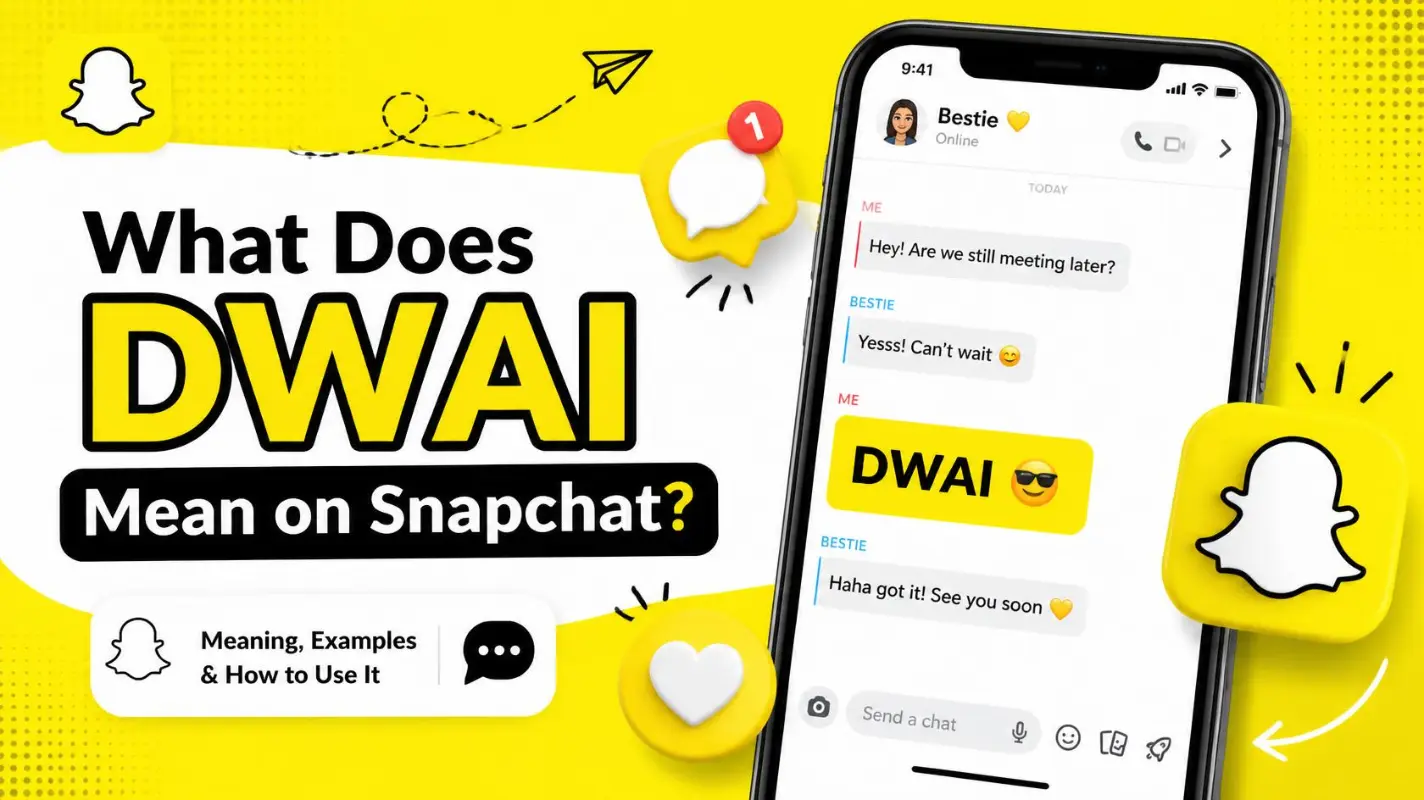
If you’ve been scrolling through Snapchat and spotted the letters “DWAI” in a chat or story reply, you’ve probably paused to figure out what it means. This short acronym shows up constantly in casual conversations, and once you know it, you’ll start noticing it everywhere. DWAI stands for “Don’t Worry About It” — a quick, friendly way to reassure someone or brush off a minor mistake without typing out a full sentence.
Snapchat thrives on fast, casual communication, and DWAI fits perfectly into that culture. Whether a friend apologizes for missing your snap, feels bad about a small mix-up, or just needs a little reassurance, DWAI delivers that comfort in four simple letters. This guide breaks down the full DWAI meaning on Snapchat, traces where it came from, and walks through exactly how people use it across different platforms and situations.
By the end of this guide, you’ll understand what DWAI means, how its tone shifts depending on context, which related acronyms often get confused with it, and how to use it naturally in your own conversations. Let’s get into it.
What Does DWAI Mean on Snapchat?
DWAI stands for “Don’t Worry About It.” People use it to reassure someone, dismiss a minor mistake, or signal that something isn’t a big deal. It works the same way phrases like “no worries” or “it’s fine” would in spoken conversation, just condensed into a fast-typing acronym.
You’ll typically see DWAI in situations like:
- Someone apologizes for a late reply to a snap
- Someone feels bad about a small mistake or mix-up
- Someone thanks you for a favor and you want to downplay it
- Someone worries about bothering you with a question
- Someone stresses over something minor and needs quick reassurance
For example, if a friend apologizes for forgetting to send you a snap back, you might reply: “DWAI, I wasn’t even waiting on it lol.”
Why DWAI and Not Just “DW”?
Snapchat users often see the shorter version, “DW,” which also means “Don’t Worry.” DWAI simply spells out the fuller phrase — “Don’t Worry About It” — rather than the shorter “Don’t Worry.” Both acronyms serve the same reassuring purpose, and people often use them interchangeably depending on personal texting habits or regional slang preferences.
Where DWAI Came From
DWAI doesn’t trace back to a single viral post or a specific influencer. Like most acronyms of its kind, it grew naturally out of texting culture, where users compress everyday phrases to type faster and keep conversations moving. “Don’t worry about it” has long been a common phrase in everyday English, used to comfort someone or wave off an apology, and the internet simply shortened it the same way it shortened phrases like “to be honest” into “TBH” or “in real life” into “IRL.”
As texting, then Snapchat, then platforms like Discord and TikTok grew in popularity, DWAI spread naturally through casual conversation among younger internet users who favor abbreviated, low-effort typing. It didn’t require an origin story — it simply reflects how quickly digital communication trims language down to its most efficient form.
How People Use DWAI Across Platforms
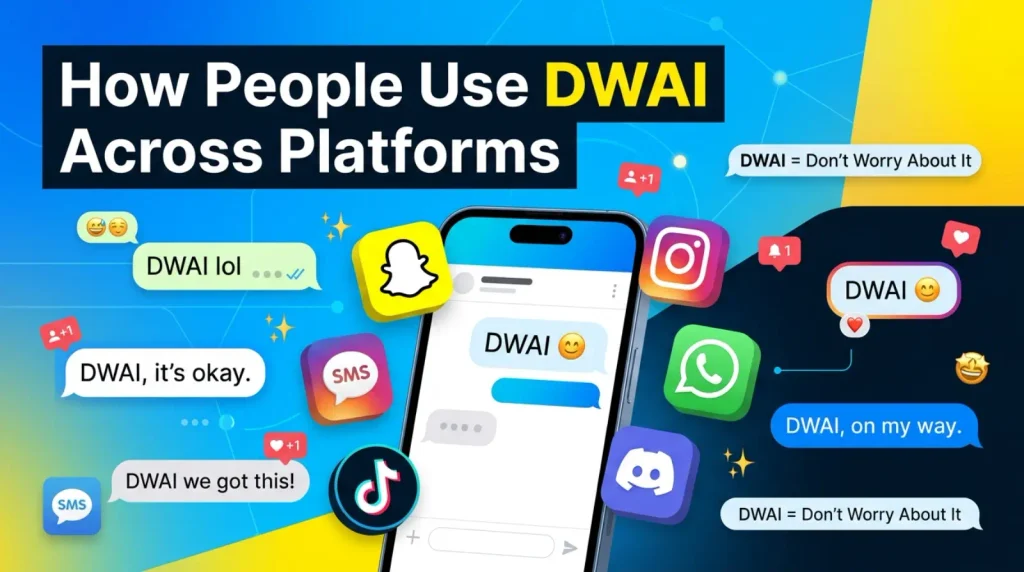
While this guide centers on Snapchat, DWAI shows up across nearly every major messaging and social platform.
DWAI on Snapchat
Snapchat’s fast, photo-driven format makes DWAI especially handy. People use it in:
- Direct chats, right after someone apologizes or expresses worry
- Story replies, reacting to something a friend posted about a mistake
- Group chats, to quickly smooth over a minor issue without dragging out the conversation
DWAI on Instagram
On Instagram, DWAI often appears in comments and DMs, especially when someone apologizes for a late response or a small oversight in a group conversation.
DWAI on TikTok
TikTok users use DWAI in comment sections, often reassuring a creator who apologizes for a mistake in a video or a delayed posting schedule.
DWAI on Discord and in Gaming Chats
Gaming communities use DWAI constantly, especially after a small in-game mistake. A teammate might type “dwai, we’ll get the next round” after someone misses a shot or makes a costly error mid-match. Because gaming conversations move quickly, short acronyms like DWAI keep morale up without slowing the action down.
DWAI in Everyday Texting
Outside of any specific platform, DWAI works exactly the same way in regular text messages. Many people default to it instead of typing “don’t worry about it” in full, especially in casual conversations with friends or family.
DWAI in Dating Contexts
In the early stages of texting someone romantically, DWAI often softens small apologies — like a late reply — without adding pressure or making the moment feel heavier than it needs to be.
DWAI in the Workplace
DWAI rarely appears in professional communication. Because it’s casual internet slang, using it in formal emails or client-facing messages can come across as unprofessional. It may occasionally show up in informal workplace chat channels among close coworkers, but it isn’t a safe default for professional settings.
Tone and Connotation: How DWAI Feels in Conversation
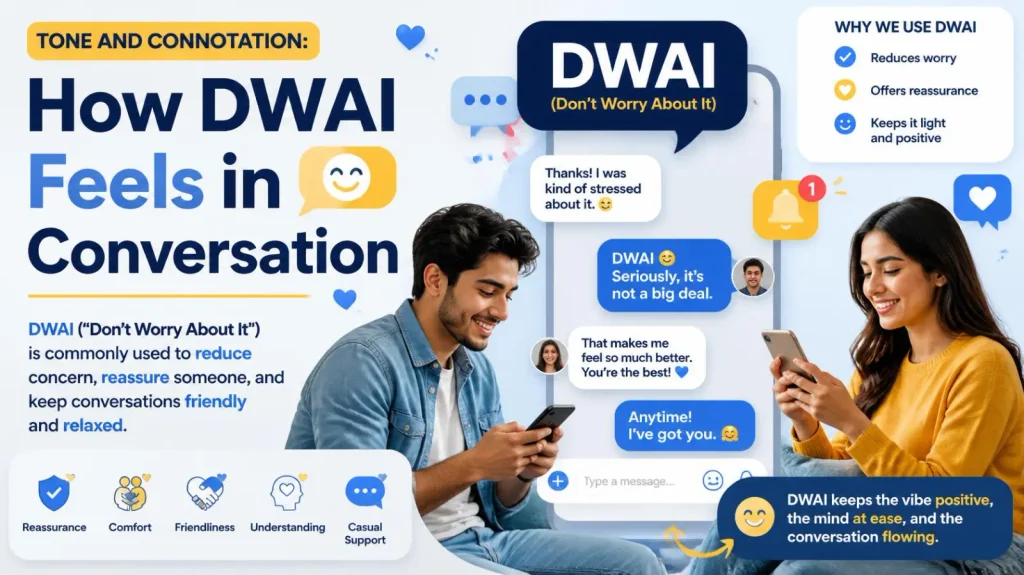
DWAI carries a warm, reassuring tone by default. Its meaning stays fairly stable across contexts, but subtle shifts still occur:
- Genuinely comforting: Most often, DWAI conveys real reassurance, letting someone know their mistake or apology truly isn’t a big deal.
- Casual and breezy: Sometimes it’s used simply to keep a conversation light, without much emotional weight behind it.
- Slightly dismissive: In rare cases, DWAI can come across as brushing off a concern too quickly, especially if the other person genuinely needed a more thoughtful response.
Because DWAI leans warm and reassuring by nature, it rarely reads as rude — but pairing it with a little extra context (“dwai, seriously it’s all good”) helps ensure it lands as sincere rather than dismissive.
Common Variations and Related Terms
Texting culture loves variations on the same core idea. Here are the terms most closely related to DWAI:
| Term | Meaning | Notes |
| DWAI | “Don’t Worry About It” | The fuller, more emphatic version of the reassurance phrase |
| DW | “Don’t Worry” | The shorter, more commonly seen variant |
| NP | “No Problem” | Frequently used interchangeably with DWAI |
| IIO | “I’m In, Obviously” or context-dependent | Occasionally confused with DWAI due to similar letter patterns |
| NBD | “No Big Deal” | Carries a nearly identical meaning and tone |
| ATP | “At This Point” | Different meaning, but appears in similar casual chat contexts |
DWAI vs. DW vs. NBD
These three terms often get used interchangeably, but subtle differences exist:
- DWAI (“Don’t Worry About It”) — the fullest, most complete version of the reassurance, often used when someone wants to sound extra sincere.
- DW (“Don’t Worry”) — the shortest, most casual version, ideal for quick replies.
- NBD (“No Big Deal”) — shifts the focus slightly, emphasizing that the situation itself wasn’t significant rather than telling someone to stop worrying.
Context usually makes it clear which nuance the sender intends, and in casual conversation, most people use these terms as near-perfect substitutes for one another.
Realistic Conversation Examples
Seeing DWAI in action helps clarify exactly how people use it in everyday chats.
Scenario 1: Late Reply
Friend: “Sorry I took forever to respond, my phone died!” You: “Dwai, no rush at all”
Scenario 2: Small Mistake
Friend: “I accidentally sent that snap to the wrong group lol” You: “Lmaooo dwai, happens to everyone”
Scenario 3: Gaming Chat
Teammate: “My bad, I missed that shot” You: “Dwai, we still got this”
Scenario 4: Reassuring a Nervous Friend
Friend: “Is it weird that I texted first?” You: “Dwai, that’s totally normal lol”
Scenario 5: Declining Thanks
Friend: “Thank you so much for helping me move that stuff!” You: “Dwai, happy to help anytime”
How to Use DWAI the Right Way
A few practical tips help you use DWAI naturally and avoid any awkward mismatches in tone:
- Use it for genuinely minor situations. DWAI works best for small mistakes, quick apologies, or light reassurance.
- Add warmth when needed. Pairing DWAI with an extra word or emoji (“dwai fr 😊”) helps it read as sincere rather than dismissive.
- Skip it in formal settings. Stick to full sentences in professional or unfamiliar contexts.
- Match the platform’s energy. DWAI fits naturally into Snapchat, gaming chats, and casual texting, but feels out of place in more formal digital spaces.
- Don’t overuse it for serious issues. If someone expresses a real concern, a fuller, more thoughtful response works better than a quick acronym.
Common Mistakes to Avoid
- Using DWAI for something that genuinely upset someone, where it can feel dismissive rather than comforting.
- Confusing DWAI with unrelated acronyms that share similar letters.
- Assuming everyone recognizes the term — some audiences may not be familiar with newer or platform-specific slang.
- Overusing it to the point that reassurance starts to feel automatic rather than genuine.
Why DWAI Has Become So Popular
Digital communication rewards speed, and DWAI fits perfectly into a culture built around quick replies, disappearing messages, and low-effort reassurance. It lets people comfort a friend or dismiss a small mistake without slowing down the conversation. As texting and messaging platforms continue to favor short, efficient language, terms like DWAI are likely to remain a fixture of everyday digital communication.
Quick Reference Summary
| Category | Details |
| Full meaning | “Don’t Worry About It” |
| Origin | Grew from general texting shorthand and everyday reassurance phrases |
| Common platforms | Snapchat, Instagram, TikTok, Discord, everyday texting |
| Tone | Warm, reassuring, casual |
| Popularity | Very common in casual digital conversation |
| Best used for | Minor mistakes, quick apologies, light reassurance |
| Avoid using for | Serious concerns, formal or professional communication |
| Related terms | DW, NP, NBD |
Frequently Asked Questions
Does DWAI mean the same thing on every platform?
Yes, for the most part. “Don’t Worry About It” remains the dominant meaning across Snapchat, Instagram, TikTok, Discord, and standard texting, regardless of platform.
Is DWAI rude to use?
No, DWAI reads as warm and reassuring by default. It can occasionally come across as dismissive if used for a genuinely serious concern, but for everyday small mistakes, it feels friendly and normal.
What’s the difference between DWAI and DW?
Both mean essentially the same thing. DWAI spells out “Don’t Worry About It” in full, while DW shortens it further to just “Don’t Worry.” Many people use them interchangeably.
Can DWAI be used sarcastically?
Occasionally, though it’s less common than with more clearly sarcastic slang terms. Most of the time, DWAI carries a sincere, reassuring tone rather than an ironic one.
Is it okay to use DWAI with someone I just started talking to?
Yes, DWAI works fine in early conversations, including with new friends or romantic interests, as a low-pressure way to dismiss a small apology or worry.
Should I use DWAI in a work email?
No. DWAI is casual internet slang, and using it in professional emails or formal communication typically feels out of place.
What should I reply if someone says DWAI to me?
You can simply move on with the conversation, reply with a quick “thanks” or “lol ok,” or continue the topic — DWAI rarely requires a formal response.
Did DWAI originate on Snapchat?
No. DWAI predates Snapchat and comes from broader texting shorthand culture. Snapchat’s fast, casual messaging style simply made it a common part of everyday conversations on the app.
Why do people use acronyms like DWAI instead of typing full sentences?
Acronyms like DWAI save time and effort, which matters on fast-moving platforms where conversations happen quickly and messages are often kept short by design.
Is DWAI more common among younger social media users?
Generally, yes. Younger users tend to favor shorthand and acronym-heavy communication, especially on platforms like Snapchat, Discord, and TikTok where casual texting culture dominates.
Conclusion
DWAI stands for “Don’t Worry About It” in the vast majority of Snapchat conversations, functioning as a quick, reassuring way to comfort a friend or dismiss a small mistake — a late reply, a minor mix-up, or an unnecessary apology. Its meaning stays consistent across nearly every platform, and its warm, casual tone makes it one of the friendliest acronyms in everyday texting culture.
Understanding DWAI — along with related terms like DW and NBD — helps you read Snapchat conversations naturally and respond in kind. Use it for lighthearted, low-stakes moments, skip it in formal settings, and add a little extra warmth when sincerity matters most. With that, you’re fully equipped to navigate this small but comforting piece of Snapchat slang.

Basra Kamal is a content writer and researcher at Top Meaning, specializing in word meanings, abbreviations, internet slang, texting terms, and modern language trends. She is passionate about making complex words and online expressions easy to understand through clear, accurate, and well-researched content. Her work helps readers quickly find reliable explanations of popular terms, phrases, and acronyms used in everyday communication and digital culture.