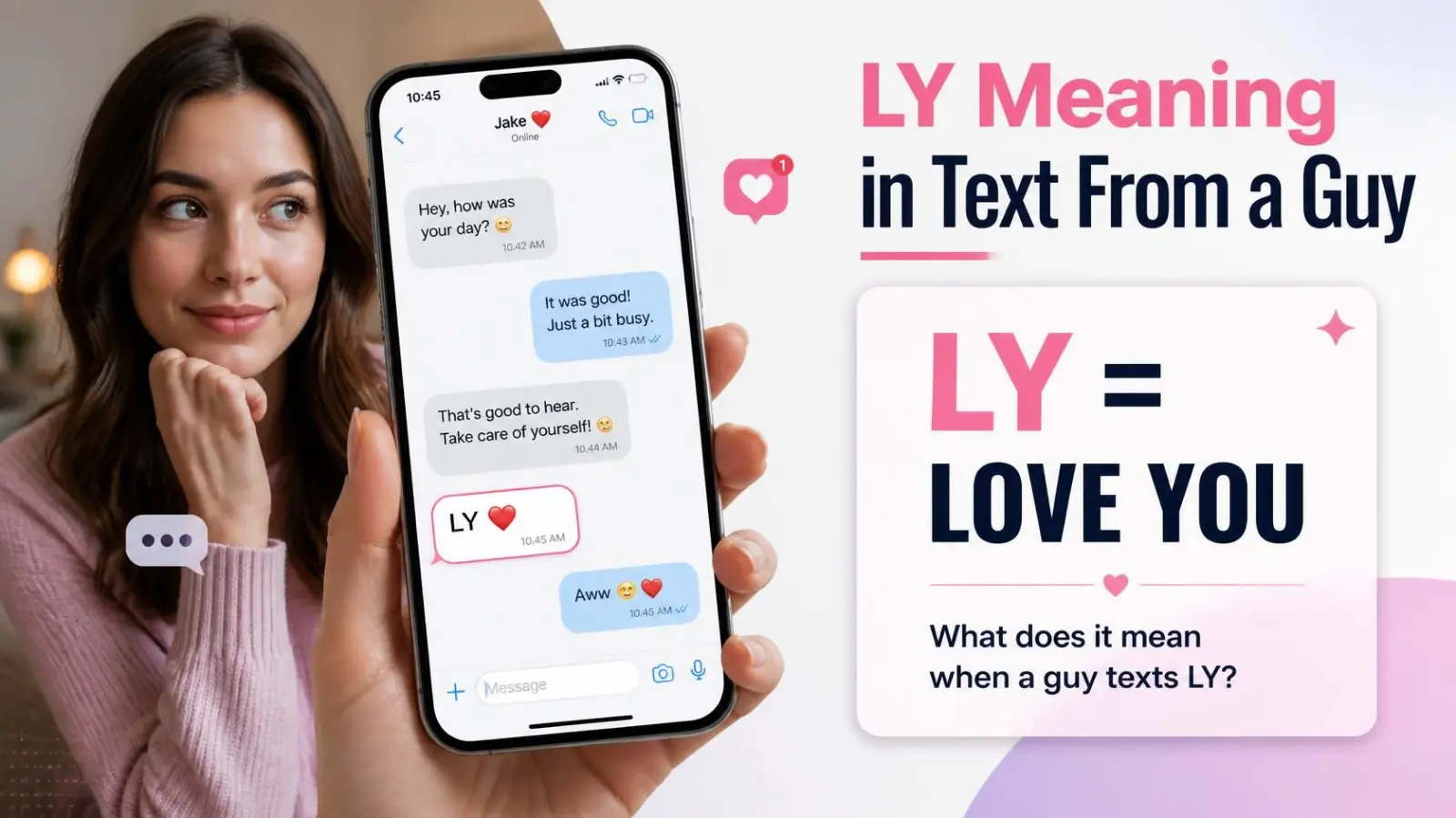
He sends a text, and right at the end, tucked in almost casually, sits two letters: “LY.” No explanation, no follow-up, just those letters sitting there while your brain immediately starts overthinking every possible meaning.
LY meaning in a text from a guy is one of the most searched texting questions out there, and it’s easy to see why. Those two letters carry a lot of emotional weight for how small they look on a screen. Most of the time, LY stands for “Love You,” a quick, casual way of expressing affection without spelling the whole phrase out. But depending on the relationship, the timing, and the guy sending it, LY can mean slightly different things.
This guide breaks down everything about LY meaning in a text from a guy: the core definition, where it came from, how it differs from other similar abbreviations like LY vs LYK vs ILY, when it signals something serious versus something casual, and how to respond without overanalyzing every letter. By the end, you’ll know exactly how to read it the next time it shows up in your messages.
What Does LY Mean in a Text From a Guy? (Quick Answer)
LY most commonly stands for “Love You” in texting. When a guy sends it, he’s typically expressing affection in a quick, low-pressure way, often at the end of a conversation. It carries genuine emotional meaning, though it’s usually softer and more casual than fully typing out “I love you.”
A typical exchange might look like this:
“Alright, heading to bed, LY”
Translation: “I love you, goodnight.”
Breaking Down the Letters
- L – Love
- Y – You
Unlike some texting acronyms built from full phrases, LY is a direct, letter-by-letter shorthand for “Love You.” It’s about as close to a literal abbreviation as texting slang gets, similar to how “TY” stands for “Thank You.”
Where LY Came From
To understand why guys use LY specifically, it helps to look at how texting culture shortened emotional phrases over time.
- SMS character limits shaped early texting habits. Back when text messages were limited to 160 characters, users shortened common phrases to save space and typing time.
- “I love you” became too long for quick exchanges. As texting turned into the primary way people communicated daily, spelling out the full phrase every time felt repetitive, especially between people who already say it often.
- LY emerged as a middle ground. It let people express the sentiment without the weight or formality of typing the complete phrase every single time.
- Social media and messaging apps normalized it further. As texting, Snapchat, and Instagram DMs became central to relationships, LY became a standard, instantly recognizable shorthand across all of them.
LY didn’t come from one specific viral trend. It developed naturally out of the broader shift toward abbreviated, efficient texting.
Why Guys Often Use LY Instead of Spelling It Out
This is where a lot of the overthinking happens. If a guy already cares about someone, why not just type the full phrase?
Here’s what’s usually going on:
- It feels less intense. Typing out “I love you” in full can feel like a bigger emotional moment, while LY keeps things light and casual.
- It’s a habit from texting culture. Many guys grew up texting in shorthand, so LY becomes second nature rather than a deliberate choice.
- It works well for quick, low-stakes exchanges. At the end of a busy conversation, LY wraps things up affectionately without slowing down the exchange.
- It can be a stepping stone. For newer relationships, LY sometimes serves as a lower-pressure way to test the emotional waters before saying the full phrase.
None of these reasons mean the feeling behind it is any less real. Shorthand doesn’t automatically equal less meaning, it often just reflects comfort and familiarity.
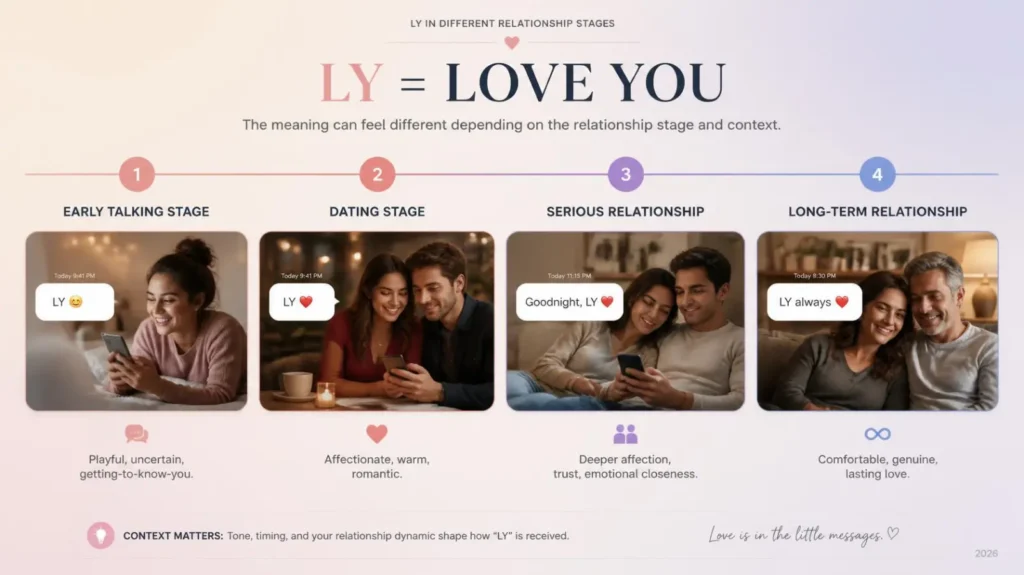
LY in Different Relationship Stages
Early Dating or Talking Stage
If LY shows up early in a relationship, it can feel like a big moment, sometimes even bigger than saying the full phrase out loud. In this stage, it often signals genuine growing feelings, though it can also be used more casually among people who say it easily.
“Had such a good time today, LY”
Established Relationships
In long-term relationships, LY often becomes a natural sign-off, used frequently and casually as an easy way to end conversations affectionately.
“Running late, love you, LY!”
Friendships
Yes, LY isn’t exclusive to romantic relationships. Close friends, including guy friends, sometimes use LY platonically, especially among friend groups that are naturally affectionate with each other.
“Thanks for listening tonight, LY man”
Family Conversations
LY frequently appears in family text threads as well, used the same way many families say “love you” quickly before hanging up a phone call.
How LY Compares to Similar Texting Terms
It helps to see LY next to other common abbreviations people often mix up.
| Term | Meaning | Typical Weight |
| LY | Love You | Casual, affectionate, common in ongoing relationships |
| ILY | I Love You | Slightly more direct and complete than LY |
| LYK | Let You Know | Unrelated to affection, purely informational |
| LYLAS/LYLAB | Love You Like A Sister/Brother | Platonic, often used among close friends |
| LU | Love You (less common variation) | Similar to LY, seen less frequently |
| XOXO | Hugs and Kisses | Affectionate, but less direct than LY |
The key difference between LY and ILY is simply completeness. ILY includes the “I,” making it read as slightly more direct, while LY feels a bit more casual and quick.
Realistic Conversation Examples
Example 1 — End of a sweet conversation
Him: “Can’t wait to see you this weekend, LY” Her: “LY too, counting down the days”
Example 2 — Quick, casual sign-off
Him: “Heading into work, talk later, LY”
Example 3 — Early relationship, meaningful moment
Him: “This might be early to say but, LY” Her: “Not too early at all, LY too”
Example 4 — Platonic use among friends
Him: “Appreciate you always having my back, LY bro”
Each example shows how tone, timing, and relationship history shape the emotional weight behind the same two letters.
Table: LY Meaning at a Glance
| Category | Details |
| Full Meaning | Love You |
| Origin | Shortened texting form of “I love you,” rooted in SMS-era abbreviation habits |
| Primary Platforms | Text messages, Snapchat, Instagram DMs, all major messaging apps |
| Tone | Affectionate, casual, sincere |
| Popularity | Extremely common across all age groups in relationships and close friendships |
| Common Use Case | Ending a conversation affectionately, expressing genuine feelings quickly |
| Related Terms | ILY, LYLAS, XOXO, LU |
| Best Used In | Romantic relationships, close friendships, family texts |
| Use With Caution In | Very early conversations where feelings haven’t been established yet |
Common Mistakes and Misreadings
- Assuming LY always means the same level of seriousness. Context and relationship history matter far more than the letters themselves.
- Overanalyzing a single instance. One LY doesn’t necessarily signal a major shift in feelings, especially if the person uses it casually with others too.
- Confusing LY with purely informational abbreviations like LYK. These look similar but mean completely different things.
- Reading too much into timing alone. A late-night LY isn’t automatically more meaningful than one sent during a regular conversation; tone and context still matter most.
Positive and Negative Connotations
LY carries an overwhelmingly positive, affectionate tone. It’s not slang associated with sarcasm, negativity, or passive aggression the way some abbreviations can be.
- Sincere use: Most commonly, LY reflects genuine affection, whether romantic or platonic.
- Habitual use: In established relationships, it can become a natural, almost automatic sign-off rather than a deeply weighted statement each time.
- Testing-the-waters use: In new relationships, it sometimes signals someone easing into expressing bigger feelings.
There’s no real negative connotation tied to LY. If anything feels off, it’s usually about inconsistency or mixed signals elsewhere in the relationship, not the abbreviation itself.
How to Respond When a Guy Sends LY
- If you feel the same way: A simple “LY too” or “love you too” works perfectly and keeps the tone consistent.
- If it feels early and you’re unsure: It’s completely fine to respond warmly without mirroring the exact phrase, something like “you’re so sweet” keeps things light.
- If you want clarity on what he means: Asking directly, like “aww, what made you say that?” opens the door for him to share more without pressure.
There’s no single “correct” response. What matters most is that your reply feels genuine rather than forced.
Cultural Relevance and Modern Trends
The widespread use of LY reflects a broader shift in how people express affection through text. As messaging has become one of the primary ways couples, friends, and families stay connected throughout the day, shorthand expressions of love have become just as normalized as saying “love you” out loud before hanging up a phone call.
This trend isn’t unique to romantic relationships. Younger generations, in particular, have extended LY into friendships and family relationships far more casually than previous generations might have with the full phrase, treating quick affectionate sign-offs as a normal part of everyday communication rather than a big, formal declaration.
Frequently Asked Questions About LY Meaning in a Text From a Guy
Does LY mean the same thing as saying “I love you” out loud? It carries similar meaning but often feels more casual. Many people view LY as a lighter, quicker way to express the same sentiment, rather than a lesser version of it.
Is LY only used in romantic relationships? No. While it’s common between partners, LY also shows up frequently in friendships and family conversations, expressed platonically rather than romantically.
Should I be worried if he sends LY without an explanation? Not necessarily. Context matters more than the abbreviation itself. If the conversation felt warm and normal, LY is usually just a genuine, casual expression of affection.
What’s the difference between LY and ILY? ILY includes the word “I,” making it read as slightly more complete and direct, while LY feels shorter and more casual, though both carry similar emotional meaning.
Does it mean less if he texts LY instead of saying it out loud? Not inherently. Many people find texting easier for expressing emotions, so LY can carry just as much sincerity as saying it in person, depending on the relationship.
Is it too soon to say LY back if we just started dating? There’s no universal timeline. If it feels genuine and matches how the relationship has been progressing, responding warmly, even without directly mirroring the phrase, is completely normal.
Can LY be used sarcastically? Rarely. Unlike some texting slang, LY doesn’t typically carry sarcastic undertones, since the phrase itself is inherently affectionate.
Why do some guys use LY instead of spelling out “I love you”? It often comes down to comfort and habit. Shorthand can feel less intense while still communicating the same genuine sentiment.
Is LY appropriate to use with family members over text? Yes, it’s very common in family text threads, functioning the same way people often say “love you” quickly before ending a phone call.
How do I know if his LY is serious or just casual? Look at the overall pattern of the relationship. If he’s consistent, attentive, and the sentiment matches his actions, LY is likely a sincere reflection of how he feels.
Final Takeaway
At its core, LY meaning in a text from a guy comes down to a simple, heartfelt idea: he’s telling you he loves you, just in a quicker, more casual form. Whether it shows up in a new relationship, a long-term one, or even a close friendship, those two letters usually carry real affection behind them.
Context, consistency, and the overall pattern of communication will always tell you more than the abbreviation alone. The next time LY shows up in your messages, you’ll be able to read it with confidence instead of confusion, and respond in a way that feels true to how you feel too.

Basra Kamal is a content writer and researcher at Top Meaning, specializing in word meanings, abbreviations, internet slang, texting terms, and modern language trends. She is passionate about making complex words and online expressions easy to understand through clear, accurate, and well-researched content. Her work helps readers quickly find reliable explanations of popular terms, phrases, and acronyms used in everyday communication and digital culture.