You send a thoughtful paragraph explaining your weekend plans, and the reply comes back instantly: “K.” No punctuation, no emoji, just one letter sitting alone in the chat bubble. If you’ve ever felt a small sting reading that message, you’re not imagining things.
The meaning of K in WhatsApp seems simple on the surface. It’s short for “okay,” a quick way to acknowledge a message. But anyone who has actually received a lone “K” knows there’s more going on. Tone, timing, and relationship context all shape how that single letter lands.
This is one of the most searched pieces of texting slang because it sits right at the edge of confusion and mild offense. Is it dismissive? Is it just efficient typing? Does it mean the person is upset?
This guide breaks down everything about the meaning of K in WhatsApp: where the letter comes from, how it differs from “Ok,” “Okay,” and “Kk,” when it reads as neutral versus cold, and how to respond when you get one. By the end, you’ll never overthink a lone “K” text again.
What Does K Mean in WhatsApp? (Direct Answer)
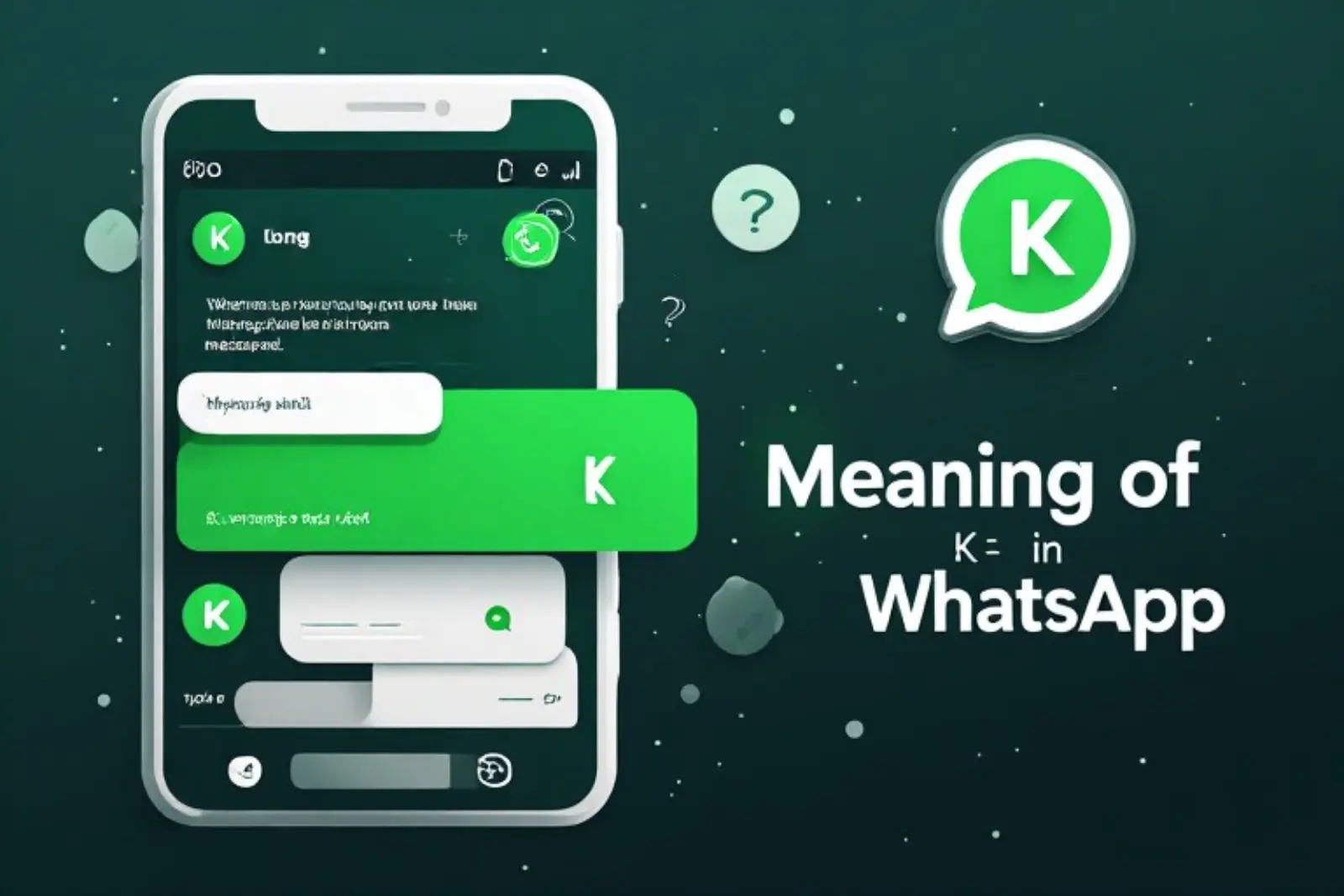
K on WhatsApp means “okay.” It’s the shortest possible way to confirm, agree, or acknowledge something someone has said. It requires the least amount of typing effort of any affirmative response in modern texting.
A typical exchange looks like this:
Friend: “I’ll call you at 7” You: “K”
On paper, that’s a complete, functional exchange. The sender confirmed the plan. Nothing more was technically needed. But in real-world texting culture, “K” often carries more emotional weight than its letter count suggests.
The Meaning of K: Breaking It Down
- K – Short for “Okay,” which itself is short for “All Correct” or “All Kaput” depending on which etymology theory you follow for the original word “okay”
Unlike acronyms built from multiple words, K is a single-letter abbreviation of an already-short word. It’s about as minimal as text responses get, one step below “Ok” and two steps below “Okay.”
Origin and History of K in Texting
To understand K, it helps to understand where “okay” itself came from, and how texting culture shortened it over time.
- The origin of “okay.” Linguists trace “okay” back to 1830s America, likely as a playful abbreviation of “oll korrect,” a joking misspelling of “all correct” that was popular in newspapers at the time.
- SMS character limits. When text messaging first became widespread in the late 1990s and early 2000s, messages were limited to 160 characters. Shortening “okay” to “k” saved space and typing time.
- Rise of instant messaging. As platforms like AIM, MSN Messenger, and later WhatsApp made real-time chatting normal, quick one-letter replies became a natural part of fast-paced conversation.
- WhatsApp era. WhatsApp’s read receipts and typing indicators added a new layer to K. Since senders can see when a message was read, a delayed or curt “K” reply can feel more noticeable than it would in old-school texting.
K didn’t start as a cold or dismissive term. It began purely as an efficiency shortcut. The emotional baggage it now carries developed gradually, as people began reading tone into short replies within fast digital conversations.
Why Does K Sometimes Feel Rude?
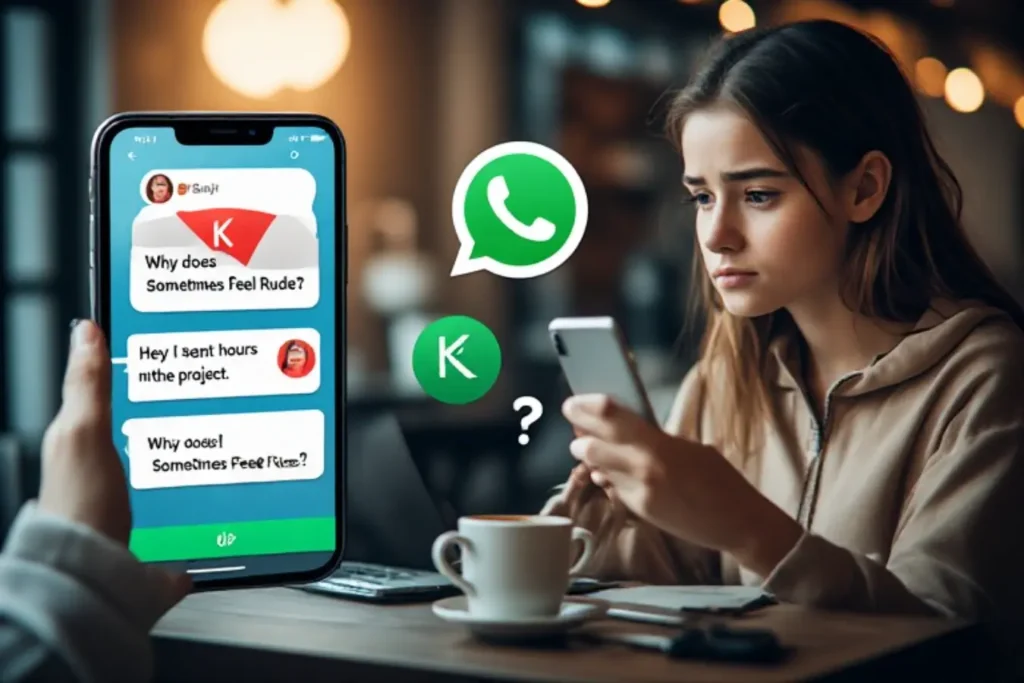
This is the heart of why so many people search the meaning of K in WhatsApp. The letter itself is neutral, but context often makes it feel loaded.
Here’s why a lone K can feel cold:
- It lacks warmth. Compared to “Okay!” or “Sounds good 😊,” a bare K skips any friendly tone markers.
- It can signal disinterest. If someone sends a long, detailed message and gets only “K” back, it can feel like the sender didn’t engage with the content.
- It sometimes follows an argument. In tense conversations, “K” is a common way to end a disagreement without continuing to talk, similar to a verbal shrug.
- It contrasts with effort. If previous replies in the conversation were longer and more expressive, a sudden switch to “K” can read as a mood shift.
None of this means K always signals a problem. Often, it’s simply the fastest way to confirm something small, like a time, a location, or a yes-or-no answer.
K vs. Ok vs. Okay vs. Kk: What’s the Difference?
Not all short affirmatives are created equal. Each version sends a slightly different signal.
| Term | Perceived Tone | Common Use Case |
| K | Blunt, sometimes cold | Quick confirmation, occasionally dismissive |
| Ok | Neutral, casual | Standard everyday agreement |
| Okay | Warmer, more complete | Friendly confirmation, slightly more effort |
| Kk | Playful, casual | Friendly agreement, common among younger users |
| Okay! | Enthusiastic, warm | Positive confirmation with energy |
| Okie/Okie dokie | Cute, lighthearted | Casual, friendly tone among close friends |
Interestingly, “Kk” often reads as friendlier than a single “K,” even though it’s technically just K typed twice. The doubling softens the tone and reads more like a casual, upbeat response rather than a clipped one.
How K Is Used in Different Contexts
K in WhatsApp Personal Chats
In everyday personal chats, K usually just confirms plans, times, or simple yes-or-no questions. Among close friends or family who text often, it rarely carries negative weight.
“Dinner at 8?” “K”
K in WhatsApp Group Chats
In group settings, K is often used to acknowledge information without adding unnecessary clutter to a busy thread.
Group message: “Meeting moved to 3pm” Reply: “K”
K in Romantic or Dating Conversations
This is where K carries the most emotional risk. In dating conversations, a lone K after a meaningful message can feel like disinterest or annoyance, even if that’s not the intent.
“I really enjoyed our date last night 😊” “K”
This kind of reply often triggers overthinking, since dating conversations tend to carry higher emotional stakes than casual friend chats.
K in Workplace WhatsApp Chats
In professional or work-related WhatsApp groups, K is generally seen as acceptable shorthand for confirming a task or instruction, especially in fast-paced environments.
“Please send the file by noon” “K”
K in Text Messages Outside WhatsApp
The same core meaning applies across SMS, iMessage, Instagram DMs, and other messaging platforms. WhatsApp doesn’t change the definition, but its read receipts can make timing and tone feel more visible than on other apps.
K on Social Media Comments
Occasionally, K appears in comment sections as a quick acknowledgment or, in some cases, a sarcastic dismissal of a comment or post.
Realistic Conversation Examples
Example 1 — Neutral, everyday use
A: “Leaving now, be there in 10” B: “K, see you soon”
Example 2 — Slightly cold or clipped
A: “I think we should talk about what happened yesterday” B: “K”
Example 3 — Friendly and casual (Kk)
A: “I’ll send the photos tonight” B: “Kk sounds good”
Example 4 — Professional confirmation
A: “Client call moved to 4pm” B: “K noted”
Notice how the surrounding words and punctuation change the entire feel of the same base letter.
Table: Meaning of K in WhatsApp at a Glance
| Category | Details |
| Full Meaning | Okay |
| Origin | Shortened from “okay,” rooted in 1830s American slang “oll korrect” |
| Primary Platform | WhatsApp, SMS, all major messaging apps |
| Tone | Neutral to slightly cold, depending on context |
| Popularity | Extremely common, used across all age groups |
| Common Use Case | Quick confirmation or acknowledgment |
| Related Terms | Ok, Okay, Kk, Sure, Got it |
| Best Used In | Casual confirmations, low-stakes replies |
| Use With Caution In | Emotional conversations, dating chats, conflict resolution |
Common Mistakes People Make With K
- Reading too much into it. Not every K signals anger or disinterest. Sometimes people are simply busy or multitasking.
- Sending K after an emotional message. If a friend or partner shares something meaningful, a bare K can unintentionally minimize their message.
- Assuming K always means the same thing. Tone depends heavily on relationship, context, and prior conversation flow.
- Overanalyzing read receipts alongside K. WhatsApp’s “seen” timestamps can make a delayed K feel more significant than intended.
Positive and Negative Connotations
K carries a flexible, situational tone rather than a fixed one.
- Neutral/positive use: Quick confirmations among people who text frequently and casually.
- Negative or cold use: Ending a conversation abruptly, especially after a disagreement or emotional message.
- Passive-aggressive use: In some cases, K is used deliberately to signal annoyance without directly saying so.
Because the letter itself has no built-in emotion, the relationship and conversation history do most of the interpretive work.
How to Reply to a K (Or Avoid Sending an Awkward One)
If you receive a K and aren’t sure how to take it:
- Don’t panic immediately. Consider whether the person is busy, driving, or multitasking.
- Ask directly if it feels off. A simple “Everything okay?” clears up confusion faster than guessing.
- Match their pace, don’t overreact. Responding with a long paragraph after receiving “K” can feel mismatched.
If you’re the one sending K and want to avoid sounding cold:
- Add a small extra word: “K, sounds good” or “K thanks!”
- Use “Kk” instead of a single K for a softer tone.
- Add an emoji if the conversation is casual: “K 👍”
Cultural Relevance and Modern Trends
The meaning of K in WhatsApp has become something of a running joke across social media, with countless memes and TikTok videos dedicated entirely to the anxiety a single “K” can cause in a relationship or friendship.
This reflects a broader trend in digital communication: as texting becomes the primary way people maintain relationships, tone interpretation has become a skill in itself. Punctuation, capitalization, response time, and word choice all carry meaning that didn’t exist in face-to-face conversation.
Younger generations, particularly Gen Z, have become especially attuned to these micro-signals, often treating short replies like K as data points about someone’s mood or interest level, sometimes more seriously than intended by the sender.
Frequently Asked Questions About K in WhatsApp
Does K mean someone is mad at me? Not necessarily. While K can sometimes signal annoyance, it’s often just a fast, low-effort way to confirm something, especially among people who text frequently.
Is K ruder than Ok or Okay? Generally, yes. K is the most minimal version and can feel more clipped, while “Okay” or “Okay!” tend to read as warmer and more complete.
Why does K feel colder on WhatsApp specifically? WhatsApp’s read receipts and online status features make timing more visible, which can make a quick, short reply like K feel more noticeable than on other platforms.
Is Kk better than K? Many people perceive “Kk” as friendlier and more casual than a single K, even though both technically mean the same thing.
Should I avoid sending K in a serious conversation? It’s generally a good idea to add a few extra words in emotionally important conversations, since a bare K can come across as dismissive even if that’s not the intent.
Does age affect how people interpret K? Yes, to some extent. Younger texters often read more emotional nuance into short replies like K compared to older generations, who may see it purely as functional.
Is it okay to ask someone what they meant by K? Yes. If a reply feels off, directly asking is usually more effective than assuming the worst.
Does K mean something different in group chats versus one-on-one chats? The core meaning stays the same, but K tends to feel less personal and less likely to be misread in group chats compared to private, one-on-one conversations.
Can K be used in professional messages? It’s generally acceptable in fast-paced or informal work chats, but adding a word or two, like “K, noted” or “K, will do,” reads more professionally.
Why do people overthink a single letter like K? Because texting removes tone of voice and facial expression, readers often fill in emotional meaning based on word choice, length, and timing, which makes short replies like K easy to misinterpret.
Final Takeaway
At its core, the meaning of K in WhatsApp is simple: it means “okay.” But as this guide shows, context, relationship, and timing shape how that single letter actually lands in a conversation.
A lone K isn’t automatically rude, and it isn’t automatically fine either. Reading the surrounding conversation, considering the relationship, and communicating directly when something feels off will always work better than guessing. The next time a “K” shows up in your chat, you’ll know exactly how to read it, and how to respond with confidence.

Basra Kamal is a content writer and researcher at Top Meaning, specializing in word meanings, abbreviations, internet slang, texting terms, and modern language trends. She is passionate about making complex words and online expressions easy to understand through clear, accurate, and well-researched content. Her work helps readers quickly find reliable explanations of popular terms, phrases, and acronyms used in everyday communication and digital culture.