You’re mid-match, everything’s on the line, and suddenly a teammate goes silent. Someone types “he got DC’d” in chat, and if you’re new to online gaming, that abbreviation can feel like its own secret language. Understanding DC gaming’s meaning is one of the first things every new player needs to learn, because it comes up constantly in competitive matches, party chats, and streaming culture.
In gaming, DC almost always stands for “Disconnect” or “Disconnected.” It describes the moment a player loses their connection to a game server, whether that’s from bad internet, a router glitch, a power outage, or the game itself crashing. It’s one of the most common pieces of gaming slang you’ll see across Discord, Twitch chat, Fortnite, League of Legends, Call of Duty, and nearly every multiplayer title out there.
This guide breaks down everything about DC gaming meaning: where it came from, how it’s used in real conversations, what causes a DC, how it differs from related terms like AFK and lag, and how to respond when it happens to you or a teammate. By the end, you’ll never be confused by “DC” in a game chat again.
What Does DC Mean in Gaming? (Direct Answer)
DC in gaming means “Disconnect” or “Disconnected.” It refers to a player losing their connection to a game’s server, which cuts them off from the match, often without warning. This can happen because of internet issues, server problems, hardware crashes, or even a deliberate rage disguised as a “disconnect.”
A typical example looks like this:
“Sorry guys, I DC’d right before the final round. My WiFi dropped out of nowhere.”
The term works as both a noun and a verb. You can say someone “is DC’d” (currently disconnected) or that they “DC’d” (the disconnection already happened).
Breaking Down the Term: DC Explained Simply
- D – Disconnect
- C – (part of the same word, not a separate initial)
Unlike acronyms that stand for multiple separate words, DC is a shortened form of a single word: “disconnect.” It’s more of a clipped abbreviation than a true acronym, similar to how “info” shortens “information.” That’s part of why it types so fast during intense gameplay moments.
Origin and History of DC in Gaming
The term didn’t appear overnight. It grew naturally out of early multiplayer gaming culture.
- Late 1990s and early 2000s online gaming. As dial-up and early broadband multiplayer games became popular, unstable connections were common. Players needed a quick way to explain sudden disappearances.
- Competitive gaming communities. As multiplayer titles like Counter-Strike, Warcraft III, and early console shooters grew, players needed shorthand that worked mid-match, when typing full sentences wasn’t practical.
- Voice and text chat platforms. Tools like Discord, TeamSpeak, and in-game chat systems made DC a standard, instantly understood term across gaming communities worldwide.
- Streaming and esports growth. As Twitch and competitive esports expanded, DC became part of mainstream gaming vocabulary, used by casual players and professional streamers alike.
Today, DC is considered one of the most universally understood pieces of gaming slang, right alongside terms like GG (Good Game) and AFK (Away From Keyboard).
Why Do Players Get DC? Common Causes
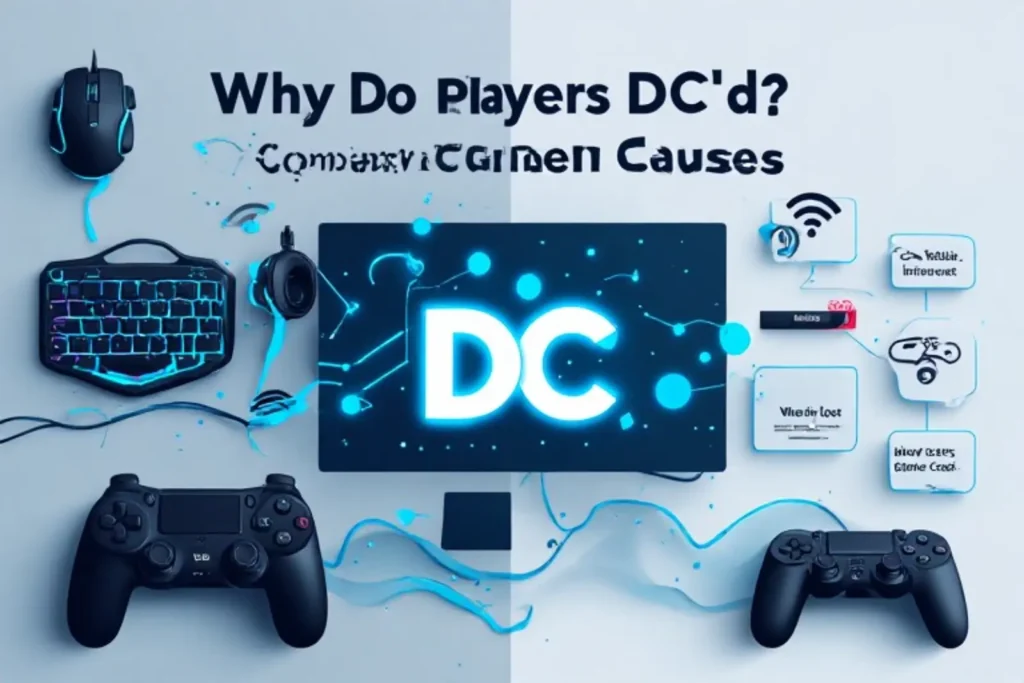
Understanding why disconnects happen helps explain why the term is so widely used.
- Unstable internet connection – Weak WiFi signals or network congestion
- Server-side issues – The game’s servers crash or reset unexpectedly
- Router or modem problems – Hardware resets or overheating
- Power outages – A sudden loss of electricity cuts the connection instantly
- Game client crashes – The game itself freezes or shuts down
- ISP throttling – Internet providers slowing down bandwidth during peak hours
- Console or PC overheating – Hardware shutting down mid-session
- Background downloads or updates – Bandwidth gets consumed elsewhere in the household
- Intentional rage quits – Some players disconnect on purpose after a bad match, then blame their internet
That last point matters. In competitive gaming spaces, “DC” is sometimes used sarcastically when players suspect someone left on purpose rather than experiencing an actual connection issue.
DC in Different Gaming Contexts
DC in Competitive and Ranked Matches
In ranked games like League of Legends, Valorant, or Overwatch, a DC can seriously affect the outcome of a match. Many games include reconnect systems that let disconnected players rejoin, but the team is often left short-handed in the meantime.
“We were winning until our support got DC’d for two minutes straight.”
DC in Battle Royale Games
In games like Fortnite, PUBG, or Apex Legends, a DC usually means instant elimination since there’s no way to “pause” a battle royale match.
“Bro I was in the final circle and got DC’d, worst timing ever.”
DC in Party and Voice Chats
Sometimes DC doesn’t refer to the game itself, but rather a voice chat platform like Discord.
“He DC’d from the call, probably his WiFi again.”
DC in Streaming and Twitch Chat
Viewers often use DC to describe a streamer’s connection dropping during a live broadcast.
Twitch chat: “Stream’s frozen, did the streamer DC?”
DC in Mobile Gaming
Mobile games are especially prone to disconnects due to shifting between WiFi and cellular data. DC is used the same way here as on console or PC.
DC vs. Similar Gaming Terms
It’s easy to confuse DC with other common abbreviations. Here’s how they differ.
| Term | Meaning | Key Difference |
| DC | Disconnect | Player loses connection entirely |
| AFK | Away From Keyboard | Player is still connected but not active |
| Lag | Delayed connection | Player is connected but experiencing delay |
| Rage Quit | Intentionally leaving after frustration | A choice, not a technical issue |
| Ping | Connection speed measurement | Describes connection quality, not a disconnection event |
| GG | Good Game | Sign-off phrase, unrelated to connection status |
The biggest distinction: AFK means present but inactive, while DC means completely disconnected from the game or server.
Realistic Conversation Examples
Example 1 — Mid-match disconnect
Player A: “Where’d Jake go?” Player B: “He got DC’d, said his router restarted”
Example 2 — Blaming lag vs. DC
Player A: “Was that lag or did you actually DC?” Player B: “Full DC, screen just froze then kicked me”
Example 3 — Streaming context
Viewer: “Chat’s spamming, did you DC?” Streamer: “Yeah my internet just dropped for a sec, back now”
Example 4 — Suspicious DC
Player A: “He ‘DC’d’ right after losing his last life 👀” Player B: “Sure he did lol”
Table: DC Gaming Meaning at a Glance
| Category | Details |
| Full Meaning | Disconnect / Disconnected |
| Origin | Early online multiplayer gaming communities |
| Primary Platforms | Discord, Twitch, console and PC multiplayer games |
| Tone | Neutral, occasionally frustrated or sarcastic |
| Popularity | Extremely common, near-universal in gaming culture |
| Common Use Case | Explaining a lost connection mid-game |
| Related Terms | AFK, lag, rage quit, ping, GG |
| Best Used In | In-game chat, voice calls, streaming chats |
| Avoid In | Formal writing outside gaming contexts |
Common Mistakes People Make With DC
- Confusing DC with lag. Lag means a delayed but active connection. DC means the connection is gone entirely.
- Assuming every DC is genuine. Experienced players know some “disconnects” are really rage quits in disguise.
- Using DC outside gaming without context. In everyday texting, DC can mean “don’t care” or refer to Washington, D.C., so using it outside a gaming conversation can cause confusion.
- Forgetting reconnect windows. Many games give a short grace period to rejoin after a DC. Not knowing this can lead to unnecessary panic or blame.
Positive and Negative Connotations
DC itself is a neutral, technical term. Nobody sees it as offensive slang. However, the emotional tone around it shifts depending on the situation:
- Neutral use: Simply explaining what happened during a match.
- Frustrated use: When a DC costs a team the game, especially in ranked or competitive play.
- Sarcastic use: When players suspect a “DC” is actually someone quitting on purpose after a loss is inevitable.
Because competitive gaming can get intense, a poorly timed DC sometimes triggers frustration in team chat, even though the term itself carries no inherent negativity.
How to Respond When Someone Gets DC
- Be understanding first. Most disconnects are genuine technical issues, not personal choices.
- Ask if they can reconnect. Many games allow players to rejoin an ongoing match.
- Adjust strategy temporarily. In team-based games, communicate a short-term plan while waiting.
- Avoid instantly blaming the player. Unless there’s a clear pattern, assume it’s a real connection issue.
A simple, friendly response like “no worries, jump back in when you can” keeps the mood positive, especially in casual matches.
Cultural Relevance and Modern Trends
As gaming has grown into one of the largest entertainment industries in the world, terms like DC have moved beyond hardcore gaming circles into mainstream digital culture. Streamers use it constantly on platforms like Twitch and YouTube Gaming. Esports commentators reference DCs during live competitive broadcasts when a professional player’s connection drops mid-match, sometimes affecting entire tournament outcomes.
Younger users, especially Gen Z and Gen Alpha gamers, have also carried gaming slang like DC into everyday texting and social media, occasionally using it loosely to describe someone going quiet in a group chat, even outside of a game.
This crossover reflects how deeply gaming culture has influenced modern digital communication as a whole.
Frequently Asked Questions About DC Gaming Meaning
What does it mean when someone says “I got DC’d”? It means they lost their connection to the game, usually due to internet, server, or hardware issues, and were removed from the match.
Is DC the same as lag? No. Lag means the connection is delayed but still active. DC means the connection is completely lost.
Can you rejoin a game after getting DC’d? In many multiplayer games, yes. Most modern titles include a reconnect window that allows disconnected players to jump back into an ongoing match.
Does DC always mean a real connection problem? Not always. Some players use “DC” as an excuse after intentionally leaving a match they’re losing, which is sometimes called a disguised rage quit.
What causes most gaming disconnects? Unstable WiFi, server crashes, router issues, power outages, and game client bugs are the most common causes.
Is DC used the same way in Discord voice chats? Yes. DC in Discord refers to a user losing connection to a voice or text channel, separate from the game itself.
Does DC mean something different outside of gaming? Yes. In general texting, DC can also mean “don’t care” or refer to Washington, D.C. Context always determines the correct meaning.
How do professional esports handle disconnects during tournaments? Most esports leagues have official pause and reconnect rules that allow matches to resume fairly after a verified disconnect.
Is it rude to assume someone faked a DC? It can come across as dismissive, so it’s best to give players the benefit of the doubt unless there’s a clear repeated pattern.
Why do console players experience DCs more during peak hours? Increased network traffic during peak gaming hours can strain both home internet connections and game servers, leading to more frequent disconnects.
Final Takeaway
At its core, DC gaming meaning comes down to one simple concept: a lost connection during online play. Whether it’s caused by shaky WiFi, a server crash, or a hardware hiccup, getting DC’d is one of the most universal experiences in online gaming.
Knowing the difference between DC, lag, and a rage quit helps you communicate clearly with teammates and react calmly when connection issues strike. The next time someone types “DC” in your game chat, you’ll know exactly what happened, and how to respond like an experienced player.

Basra Kamal is a content writer and researcher at Top Meaning, specializing in word meanings, abbreviations, internet slang, texting terms, and modern language trends. She is passionate about making complex words and online expressions easy to understand through clear, accurate, and well-researched content. Her work helps readers quickly find reliable explanations of popular terms, phrases, and acronyms used in everyday communication and digital culture.


2 thoughts on “DC Gaming Meaning What It Really Stands For and How Gamers Use It”