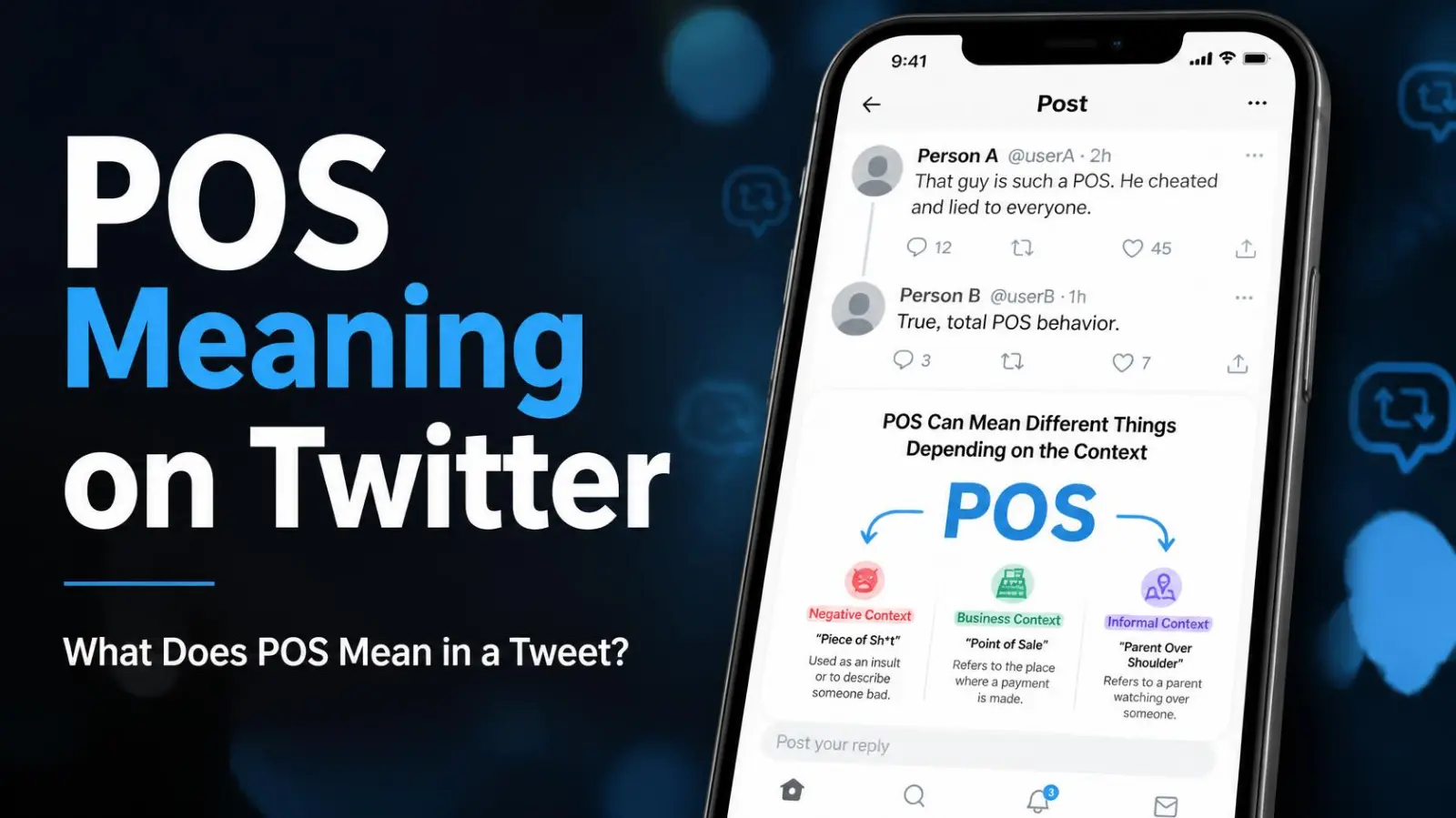
You saw it. Someone typed POS at the end of a tweet, or maybe threw it at you in a reply, and now you’re staring at your screen trying to figure out if you just got insulted or complimented. Fair reaction. This one abbreviation genuinely means different things depending on where it lands.
Here’s the short version: POS on Twitter usually means one of three things — a friendly tone indicator for “positive,” a blunt insult for “piece of s***,” or, in business tweets, point of sale. Same letters, wildly different vibes.
This guide walks through what POS means, how to spot which version you’re dealing with, and how to actually respond depending on the situation you’re in — whether that’s a friend teasing you, a stranger picking a fight, or a company tweeting about their checkout system.
First, the Quick Answer
If someone wrote /pos (lowercase, with a slash), relax — it’s a compliment. It means “I’m saying this in a positive way.”
If someone wrote POS (no slash, often caps), it’s probably not a compliment. It’s short for “piece of s***,” a sharp insult aimed at a person, object, or situation.
If a business account tweeted it, they’re almost certainly talking about point of sale — the system stores use to ring up purchases.
Now let’s dig into each one, because the details matter more than the letters themselves.
Where This Abbreviation Came From
POS isn’t a Twitter invention. It’s been kicking around online since the late ’90s and early 2000s, back in forums and instant messenger chats. Back then it mostly meant two things: “Parent Over Shoulder” (a heads-up to friends) and, yes, “piece of s***.”
The tone-indicator version — /pos — came later, out of communities that cared a lot about clear communication, including neurodivergent and autistic online spaces. Typing strips out tone of voice, so sarcasm and genuine compliments can look identical on a screen. Slash tags like /pos, /neg, and /j were created to fix that ambiguity. Twitter’s fast, text-heavy format made it a natural home for this system, and it spread from there.
So really, you’re looking at two separate slang traditions that happen to share the same three letters. That’s the whole source of the confusion.
Situation 1: A Friend Tweets Something Weird, Then Adds /pos
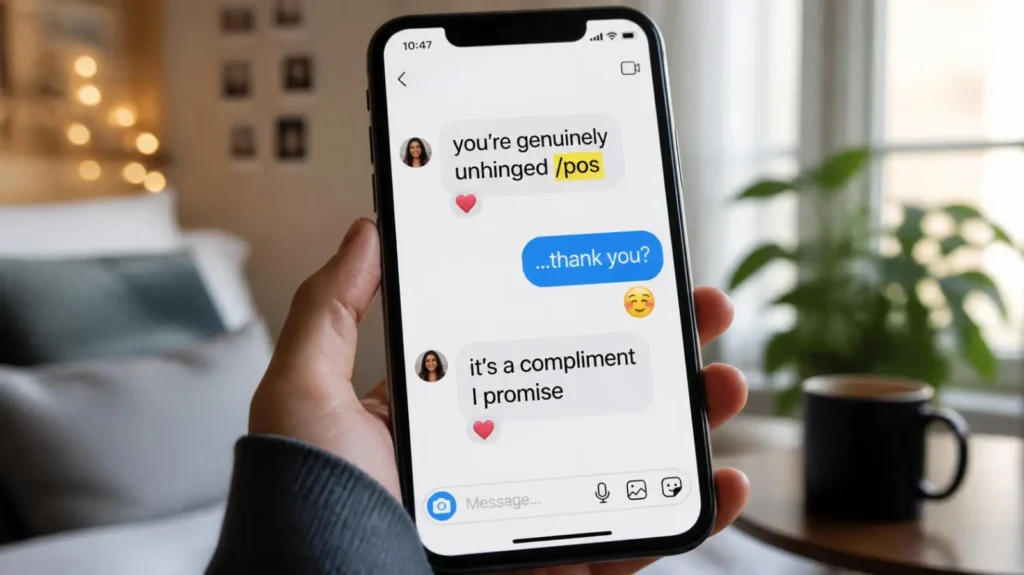
This is the most common way you’ll run into POS in casual conversation.
Example exchange:
Friend: “you’re genuinely unhinged /pos” You: “…thank you?” Friend: “it’s a compliment I promise”
The /pos here does exactly what it’s supposed to: it tells you the slightly odd-sounding comment was meant with warmth, not criticism. You’ll see this a lot in fandom spaces, meme accounts, and friend groups where teasing and affection blur together.
How to respond: Just take it as intended — a compliment wrapped in chaos. A simple “lol thank you” or a laughing emoji works fine. No need to overthink it.
Other tags that often show up next to /pos, in case you want to be fluent in the whole system:
- /neg — negative tone
- /j — joking
- /gen — genuinely asking or saying
- /srs — being serious right now
- /rh — rhetorical, no answer needed
Situation 2: Someone’s Genuinely Angry and Calls Something (or Someone) a POS
This is the version that stings. No slash, often in caps, usually attached to real frustration.
Example exchange:
“I can’t believe he did that to her. absolute POS.” “no fr, seen enough of his tweets to know this checks out”
Here, POS is doing exactly what “piece of s***” would do if spelled out — it’s a harsh judgment call on someone’s character or behavior. You’ll see this most in callout threads, quote-tweet pile-ons, and arguments that have stopped being polite.
How to respond, depending on your role:
- If it’s about someone else’s bad behavior: you’re probably just reading commentary, not part of the conflict. No response needed unless you want to weigh in.
- If it’s aimed at you: take a breath before reacting. Ask yourself if the criticism has substance or if it’s just heated venting. Responding calmly (“let’s keep this civil”) often de-escalates faster than firing back.
- If it’s about an object (“this printer is such a POS”), it’s just frustration, not personal. A relatable “same, mine did that last week” fits right in.
Situation 3: A Company Tweets About Their POS
Different world entirely.
Example exchange:
“Exciting news — our new POS system rolls out to all 40 locations next week!” “Does this fix the checkout freezing issue?”
No slang here. POS means point of sale — the hardware and software businesses use to process purchases. You’ll see this from retail brands, restaurants, cafés, and fintech accounts.
How to respond: Treat it like any normal customer service or business conversation. If you have a question about the system, ask it directly — you won’t confuse anyone by using “POS” in this context, since the surrounding tweet makes the meaning obvious.
How to Quickly Tell Which One You’re Looking At
Next time you’re unsure, run through this in your head:
- Is there a slash before it? /pos = tone indicator. Plain POS = probably not.
- What’s the sentence doing? Compliment or playful comment → tone indicator. Complaint or criticism → insult.
- Who’s tweeting? A business account → point of sale. A personal account mid-argument → insult. A friend being weird → tone indicator.
- What’s the overall vibe of the thread? Fandom or meme energy → tone indicator. Callout or drama thread → insult. Customer service → point of sale.
If you’re still stuck, it’s completely fine to just ask. “Wait, positive or…?” is a normal thing to type back.
POS on Other Apps, Briefly
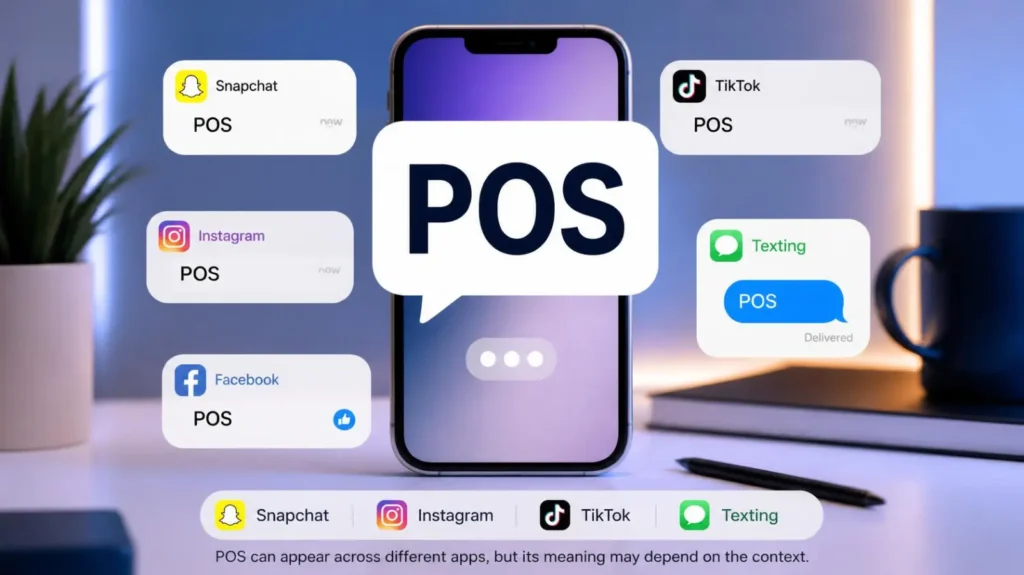
Twitter isn’t the only place this shows up, and the meaning shifts a bit depending on the app:
| Where | What It Usually Means |
| TikTok | Often “positive vibes” in captions, sometimes just a meme tag |
| Mix of tone indicator and insult, depends on the caption | |
| Snapchat | Frequently “Parent Over Shoulder” among younger users |
| Discord | Insult (“piece of s***”) shows up a lot in gaming servers |
| Context-dependent, insult meaning is common in comments | |
| Texting | Both “Parent Over Shoulder” and the insult, depending on who’s sending it |
Mistakes People Actually Make With This Word
- Assuming /pos is sarcastic. It’s the opposite — it exists to remove sarcasm, not add it.
- Taking “this app is a POS” personally. It’s about the app, not you, even if you built it.
- Skipping the slash and getting misread. If you mean it kindly, add the /pos — dropping it makes people assume the harsher meaning.
- Confusing a retail company’s tweet with slang. If a café tweets about their “new POS,” they’re not insulting anything.
- Reacting defensively before checking context. A pause before replying saves a lot of unnecessary drama.
Positive vs. Negative, Side by Side
| /pos (Tone Indicator) | POS (Insult) | |
| Format | Lowercase, with a slash | Caps or plain, no slash |
| Feels like | A hug wrapped in chaos | A verbal eye-roll, sometimes sharper |
| Common crowd | Fandom, meme accounts, close friends | Callout threads, arguments, frustrated reviews |
| Sample line | “you’re feral /pos” | “what a POS thing to say” |
| Best response | Laugh it off, say thanks | Stay calm, assess if it’s worth engaging |
Why This Double Meaning Even Exists
It’s a little unusual for one abbreviation to carry near-opposite meanings, but it makes sense once you know the backstory: these are really two different slang traditions that happen to overlap in letters, not one word that flipped meaning over time.
The tone-indicator side reflects something bigger happening online — people getting more intentional about avoiding misunderstandings in text, especially in communities where tone gets lost easily. The insult side reflects the opposite trend: fast, blunt language built for arguments that move quicker than a full sentence can keep up with.
Both are here to stay. Twitter (X) is still a mix of close-knit fandom spaces and heated public disagreements, so expect POS to keep living its double life for a while.
Quick Reference Table
| Category | Details |
| Term | POS / /pos |
| Main meanings | Tone indicator (positive), insult (“piece of s***”), Point of Sale |
| Origin | Late 1990s–2000s chat forums; tone-indicator use grew from communication-focused online communities |
| Most common on Twitter | Both /pos and POS-as-insult, depending on formatting |
| Tone range | Warm and clarifying to sharp and confrontational |
| Who uses it most | Teens, young adults, fandom and meme communities |
| Related tags | /neg, /neu, /j, /gen, /srs |
| Rule of thumb | Slash = kind. No slash = probably not. |
Frequently Asked Questions
Someone replied “/pos” to my tweet — should I be worried? No, the opposite. /pos means they meant their comment kindly, even if it sounded a little odd or blunt on its own.
Is it okay for me to call someone a POS as a joke? Only if you know them well and the relationship can handle it. Without that context, it usually reads as a genuine insult, so it’s safer to save it for objects or add a clear joking tone.
Why do some people skip the slash when they mean it positively? Usually because they assume the context makes it obvious, or they’re not familiar with the tone-indicator system. It’s a common source of mixed signals.
Does POS always mean “piece of s*” when there’s no slash?** Not always — check who’s tweeting. A retail or business account almost certainly means point of sale, not an insult.
Where did tone indicators like /pos actually start? They grew out of online spaces focused on clear communication, including neurodivergent and autistic communities, as a way to prevent text from being misread.
What should I do if someone calls me a POS in an argument? Pause before responding. Decide if there’s a real point buried in the insult worth addressing, or if it’s just heated venting not worth engaging with directly.
Is POS used the same way on TikTok and Instagram as on Twitter? Mostly, though TikTok leans more toward “positive vibes” in captions, while Twitter has a stronger callout-culture use of the insult version.
Can POS mean something else entirely, like “Parent Over Shoulder”? Yes, especially in texting among younger users, though this meaning shows up far less often on Twitter itself.
Is it appropriate to use POS slang at work? Stick to “point of sale” in professional contexts. The slang meanings, positive or negative, read as too casual or offensive for workplace conversations.
Will POS keep meaning the same things going forward? Slang shifts constantly, but for now, the tone indicator and insult meanings remain the two you’ll run into most on Twitter.
Bottom Line
So, what does POS mean on Twitter? It depends entirely on the slash, the sentence, and who’s talking. /pos means someone likes you, chaos and all. Plain POS usually means the opposite. And if a business is tweeting it, they’re just talking about their checkout system.
Next time it shows up on your timeline, don’t panic — check the format, read the room, and you’ll know exactly what you’re dealing with before you even hit reply.

Basra Kamal is a content writer and researcher at Top Meaning, specializing in word meanings, abbreviations, internet slang, texting terms, and modern language trends. She is passionate about making complex words and online expressions easy to understand through clear, accurate, and well-researched content. Her work helps readers quickly find reliable explanations of popular terms, phrases, and acronyms used in everyday communication and digital culture.









1 thought on “What Does POS Mean on Twitter? A Simple Guide for Every Situation”