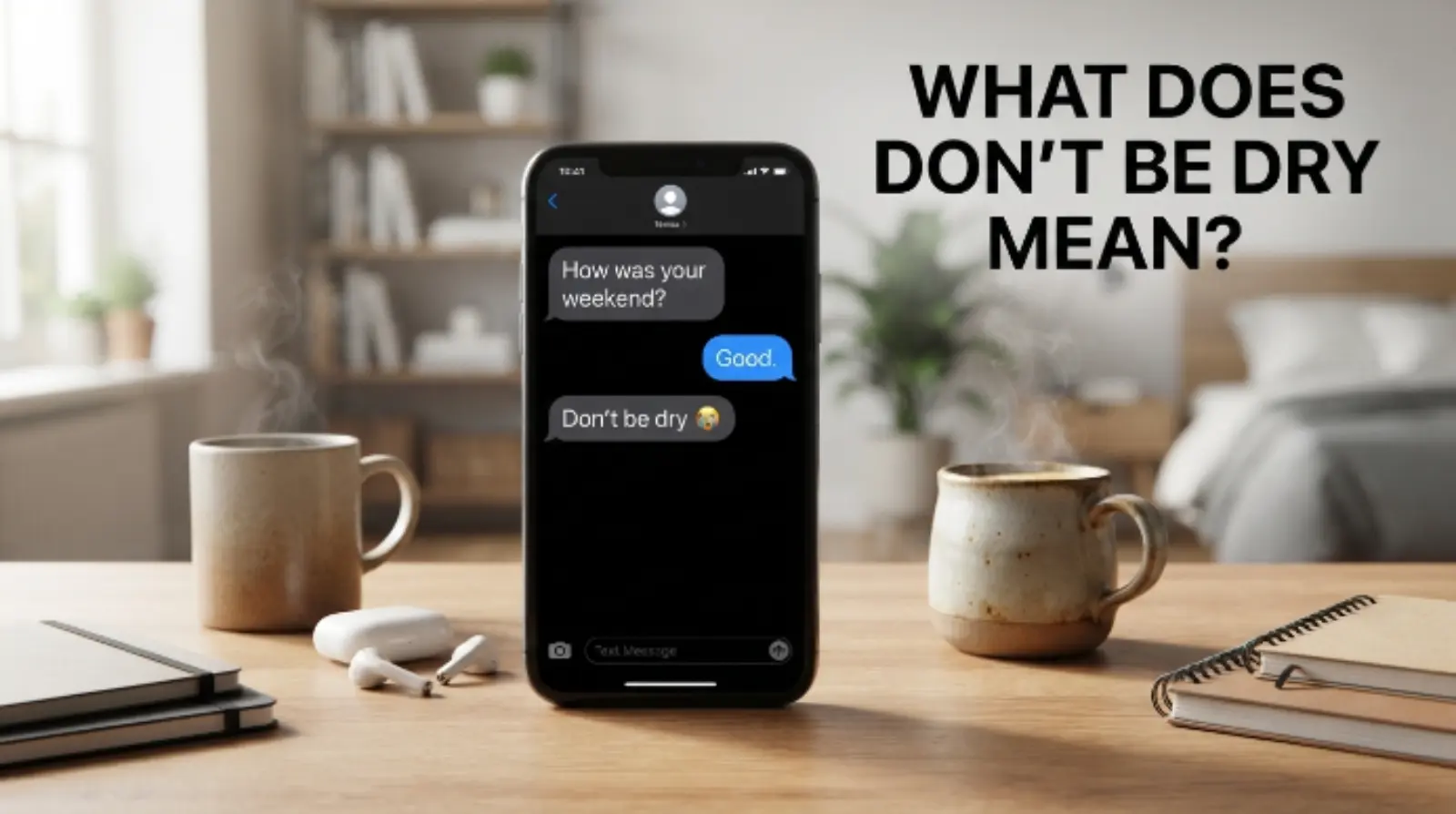
You send a text you thought was totally normal, and the reply comes back: “don’t be dry 😒.” No further explanation. Just those three words, sitting there, making you reread your last message like it’s a crime scene. If you’ve landed here trying to figure out what “don’t be dry” means, you’re definitely not the first person to Google it mid-conversation.
Here’s the short version: “don’t be dry” means “stop being boring, low-effort, or emotionally flat in this conversation.” It’s a call-out, usually aimed at short replies, one-word answers, or responses that show zero interest or energy. It’s become one of the most common phrases in modern texting slang, especially among Gen Z on Instagram, Snapchat, and TikTok, where “dry texting” has turned into its own whole category of complaint.
This guide breaks down exactly what “don’t be dry” means, where the slang came from, how it shows up across different platforms and situations — friendships, dating, group chats — and how to respond if someone says it to you. You’ll also get real conversation examples, common mistakes, and a full FAQ section, so you’ll never have to wonder what it means again.
Quick Answer: What Does “Don’t Be Dry” Mean?
“Don’t be dry” is a request — sometimes playful, sometimes irritated — for someone to bring more energy, personality, or effort into a conversation. It gets used when someone’s replies feel flat, short, boring, or emotionally disconnected from the energy the other person is bringing.
Being called “dry” doesn’t mean you did something wrong exactly. It means your texting style, in that moment, isn’t matching the vibe of the conversation. Common triggers include:
- One-word replies (“k,” “lol,” “cool”) to a message that deserved more
- Taking forever to respond, then giving a short answer anyway
- Responding to something exciting or funny with zero enthusiasm
- Never asking follow-up questions or keeping the conversation going
“Don’t be dry” is essentially shorthand for “put in some effort here” — and once you know that, most conversations that include it make a lot more sense.
Where “Dry” as Slang Came From
“Dry” has meant “boring” or “lacking personality” in casual English for a long time, well before texting existed. Describing a person, a joke, or a lecture as “dry” — meaning flat, dull, or humorless — is an old, established use of the word.
What changed is the specific application to texting style. As messaging apps and DMs became the primary way people build and maintain relationships, especially romantic or flirty ones, a whole vocabulary developed around how someone texts, not just what they say. “Dry texting” emerged as a specific complaint: someone whose messages lack warmth, curiosity, or effort, regardless of how they act in person.
“Don’t be dry” is the direct, in-the-moment version of that complaint. Instead of describing someone as a dry texter after the fact, the phrase gets used live, mid-conversation, usually as a nudge to fix the energy before the conversation fizzles out entirely.
What Actually Counts as “Dry” Texting?
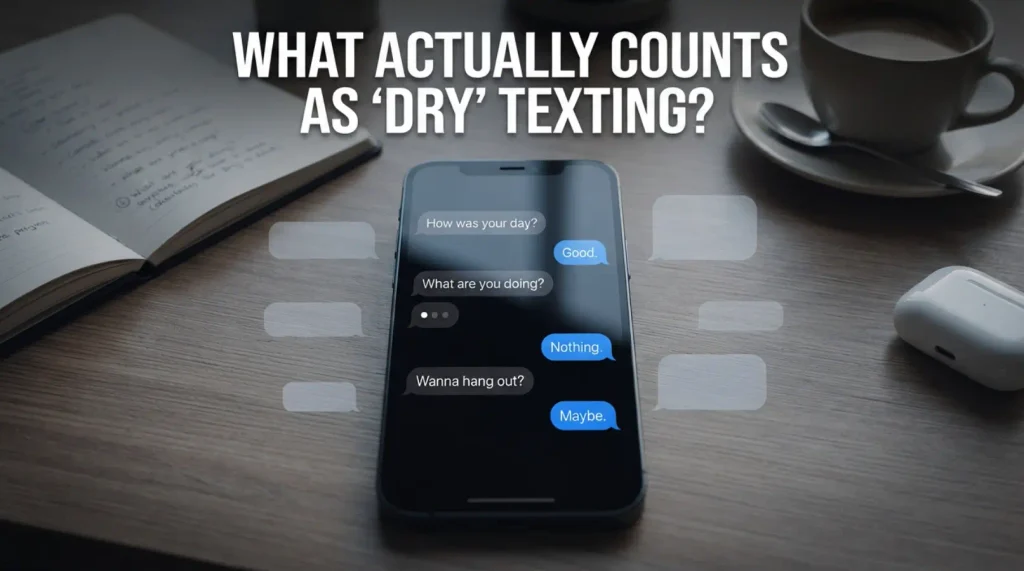
Not every short message counts as dry. Context matters a lot here. Generally, texting reads as “dry” when it includes one or more of these patterns:
- One-word or single-emoji replies to messages that clearly invited more conversation
- No questions back — the conversation only moves forward because one person keeps asking things
- Mismatched energy — replying “haha” to something genuinely funny, or “oh nice” to big news
- Long response gaps paired with minimal effort once the reply finally comes
- Flat punctuation and tone — no exclamation points, no follow-up, nothing that signals interest
A text isn’t automatically dry just because it’s short. “omw” in response to “where are you” is short, but it’s not dry — it’s just efficient. Dry texting specifically involves a mismatch: someone is clearly trying to build a conversation, and the other person isn’t matching that effort.
Real Conversation Examples
Seeing “don’t be dry” in context makes the meaning click a lot faster than any definition can.
Example 1: Casual friend check-in
A: “guess what happened today 😭😭” B: “what” A: “don’t be dry, ask me properly lol”
Here, A wanted enthusiasm and curiosity, and B’s flat one-word reply didn’t deliver it. “Don’t be dry” is a lighthearted nudge to engage more, not a real accusation.
Example 2: Flirty tension
A: “you looked really cute today” B: “thanks” A: “that’s all?? don’t be dry 😌”
This is one of the most common contexts for the phrase. A put in effort with a compliment, and B’s short “thanks” didn’t return that energy. “Don’t be dry” here is playful, almost flirtatious — a way of saying “give me more than that.”
Example 3: Group chat energy check
A: “we’re doing a trip this weekend, who’s in” B: “maybe” A: “don’t be dry, yes or no lol”
In a group setting, “don’t be dry” often means “commit to something” rather than giving a vague, low-effort non-answer.
Example 4: Dating app conversation
A: “okay but what’s your actual type” B: “idk, just someone cool” A: “don’t be dry, give me details 😂”
On dating apps specifically, this phrase shows up constantly, since a big part of early attraction happens entirely through how someone texts.
“Don’t Be Dry” Across Platforms
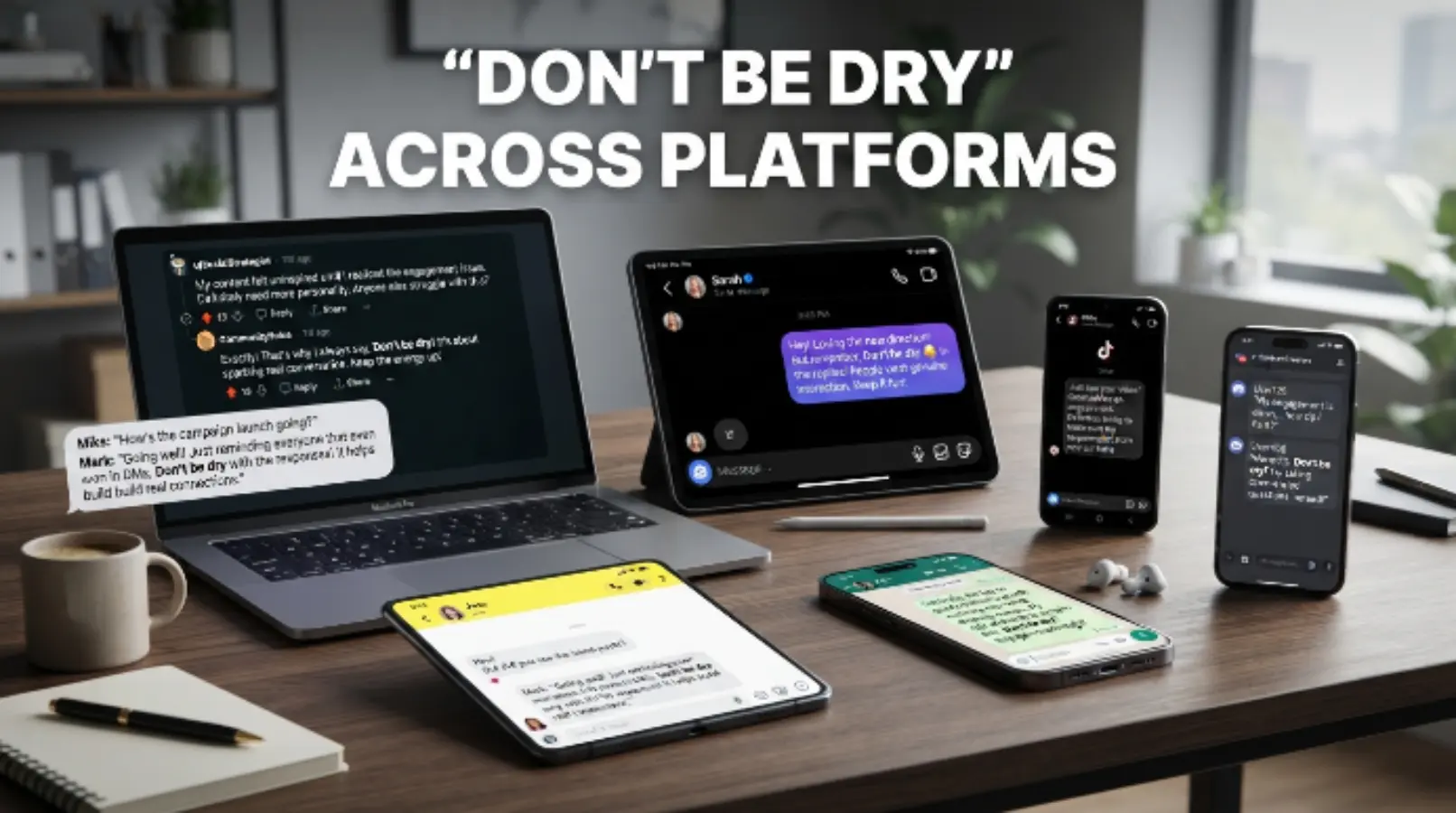
The phrase and the broader “dry” complaint show up slightly differently depending on where the conversation is happening.
Texting and iMessage
This is where “don’t be dry” appears most directly, usually between friends or romantic interests, calling out short or low-effort replies in real time.
In DMs, “dry” gets used to call out flat conversations, and in comment sections when someone replies to something funny or exciting with a lifeless “ok” or “lol.”
Snapchat
Snapchat has its own specific version of this complaint: the dry snap — a blank photo with no caption, or a one-word reply to an actual attempt at conversation. A “dry streak,” where every exchange feels like a chore, is a frequent complaint here.
TikTok
Creators sometimes get called dry in comment sections when their replies to fans feel scripted, robotic, or emotionally distant. “Dry” also describes content that lacks personality or humor.
Discord and Reddit
In gaming servers and forum threads, “dry” shows up less as a direct callout and more as a general description — someone whose messages consistently lack humor or engagement gets labeled a dry texter over time.
Workplace Communication
This phrase essentially never appears in professional messaging. Short, efficient replies at work read as normal, not dry, since the goal there is clarity, not emotional engagement.
Positive, Negative, or Just Playful? Reading the Tone
“Don’t be dry” can land very differently depending on who says it and how.
| Context | Likely Tone |
| Close friend, casual chat | Playful, teasing, no real offense meant |
| Flirty or dating conversation | Light flirtation, testing chemistry |
| Frustrated partner or close friend | Genuine annoyance about low effort |
| Group chat | Usually playful, sometimes a nudge to commit or respond properly |
| Stranger or new match | Can be a subtle sign they’re losing interest |
The safest way to read it: if the rest of the conversation feels warm and joking, “don’t be dry” is almost certainly lighthearted. If it follows a pattern of genuinely short, uninterested replies over time, it may be a real, if gentle, complaint about how the conversation feels.
How to Respond If Someone Says “Don’t Be Dry”
Getting called dry doesn’t require a dramatic response. A few approaches work well depending on the situation.
Own it and adjust:
“omg you’re right, let me actually tell you the story 😂”
Playfully push back:
“I’m not dry, I’m just efficient”
Add energy immediately:
Follow up with a genuine question, a longer reply, or an exclamation point or two to shift the tone.
If it’s a repeated pattern, ask directly:
“do I actually come across as dry? lol I don’t mean to”
The goal isn’t to overcorrect into forced enthusiasm — it’s just to show the other person you’re actually engaged in the conversation, not just present for it.
Common Mistakes People Make With This Phrase
- Taking it too personally. Most of the time, “don’t be dry” is a light nudge about texting style in one moment, not a judgment of someone’s entire personality.
- Assuming all short texts are dry. Brevity isn’t the problem — mismatched energy and lack of engagement are.
- Overcorrecting with forced enthusiasm. Suddenly typing in all caps with ten exclamation points can feel just as off as being too flat. Genuine engagement matters more than volume.
- Using it too harshly with someone new. Calling a new match or acquaintance “dry” right away can come across as impatient rather than playful, since there’s no established rapport yet.
- Confusing “dry” with being introverted or shy. Someone can be quiet or reserved in person and still text warmly, or vice versa — the two aren’t the same thing.
“Don’t Be Dry” vs. Similar Expressions
A few related phrases get used in similar situations. Here’s how they differ:
| Phrase | Meaning | How It Differs |
| Don’t be dry | Stop being low-effort or flat in this conversation | Direct, in-the-moment callout |
| You’re so dry | A general label for someone’s texting style | Describes a pattern, not a single moment |
| Left on read | A message goes unanswered entirely | About non-response, not low-effort response |
| Giving one-word answers | A description of a specific dry-texting habit | A cause of “dry” behavior, not a separate phrase |
| Mid | Something is mediocre or unimpressive | Broader slang, not specific to conversation style |
“Don’t be dry” is unique among these because it’s typically said mid-conversation, as a nudge, rather than as a label applied afterward.
Why This Phrase Resonates So Much Right Now
Texting has become one of the primary ways people build early relationships, whether that’s friendships, situationships, or romantic connections. Because so much of that early impression happens entirely through text, how someone texts has become just as important as what they say.
“Don’t be dry” reflects that shift. It’s not really about grammar or spelling — it’s about whether the conversation feels alive. In a world where a huge amount of connection happens through a screen, flat, low-effort texting can genuinely feel like disinterest, even when that’s not the intention at all. The phrase gives people a quick, casual way to name that feeling without a bigger, more serious conversation about “communication styles.”
Quick Reference Summary Table
| Category | Details |
| Phrase | “Don’t be dry” |
| Meaning | Stop being low-effort, flat, or boring in this conversation |
| Origin | Builds on the older slang use of “dry” meaning boring or humorless, applied specifically to texting style |
| Common usage | Texting, Instagram DMs, Snapchat, dating conversations, group chats |
| Tone | Ranges from playful and flirty to genuinely frustrated |
| Popularity | Widely used, especially among younger texters and on dating apps |
| Related terms | Dry texter, dry snap, one-word answers, mid |
| Best response | Match the energy with a genuine, engaged reply |
Frequently Asked Questions
Is “don’t be dry” an insult? Usually not seriously. Most of the time it’s a playful or lightly teasing nudge to bring more energy into a conversation, rather than a genuine insult about someone’s personality.
What does it mean if a guy says “don’t be dry”? It generally means he wants more engagement, enthusiasm, or effort in the conversation, often used in flirty or dating contexts to encourage a livelier back-and-forth.
What does it mean if a girl says “don’t be dry”? Same meaning applies regardless of who says it — she’s asking for more energy or interest in the conversation, not a coded message about anything beyond that.
How do I stop being a dry texter? Ask follow-up questions, match the other person’s tone and enthusiasm, avoid one-word replies when the conversation calls for more, and respond with genuine curiosity rather than the shortest possible answer.
Is being called “dry” the same as being boring in real life? Not necessarily. Someone can be lively in person but text minimally out of habit, or vice versa. “Dry” specifically describes texting or messaging style, not someone’s overall personality.
Can “don’t be dry” be a sign someone’s losing interest? Sometimes, especially with a new match or early-stage dating conversation. If it comes up alongside genuinely short, unengaged replies over time, it may reflect real frustration rather than playful teasing.
Is “dry” the same as “mid”? No. “Mid” describes something as mediocre or unimpressive in general, while “dry” specifically describes a lack of energy or effort in conversation or communication style.
Why do people get called “dry” more in dating conversations than casual chats? Early dating relies heavily on text-based first impressions, so texting energy carries more weight there. In established friendships, occasional short replies don’t usually raise the same concern.
Should I ever use “don’t be dry” with someone I just started talking to? It’s usually safer to save it for people you already have some rapport with. Using it too early with someone new can come across as impatient rather than playful.
Final Takeaway
So, what does “don’t be dry” mean? At its core, it’s a quick, casual way of saying “bring more energy into this conversation.” Whether it shows up between close friends, in a flirty exchange, or in a group chat, the underlying message stays the same: match the effort, engage a little more, don’t let the conversation go flat.
Getting called dry isn’t usually a big deal — it’s rarely a serious criticism, and it’s easy to fix once you know what someone’s actually asking for. Next time it pops up in your messages, you’ll know exactly what to do: ask a real question, add a little enthusiasm, and keep the conversation moving.

Basra Kamal is a content writer and researcher at Top Meaning, specializing in word meanings, abbreviations, internet slang, texting terms, and modern language trends. She is passionate about making complex words and online expressions easy to understand through clear, accurate, and well-researched content. Her work helps readers quickly find reliable explanations of popular terms, phrases, and acronyms used in everyday communication and digital culture.




1 thought on “What Does “Don’t Be Dry” Mean? The Full Breakdown of This Texting Phrase”