If you’ve scrolled through a TikTok comment section and stumbled on someone typing “YWA” after explaining a hack, sharing advice, or replying to a question nobody thanked them for, you’ve probably paused and thought, wait, what does that even mean? You’re not alone. YWA is one of those small, sneaky internet abbreviations that shows up constantly in comments, Snapchat streaks, and group chats — yet almost nobody explains it clearly.
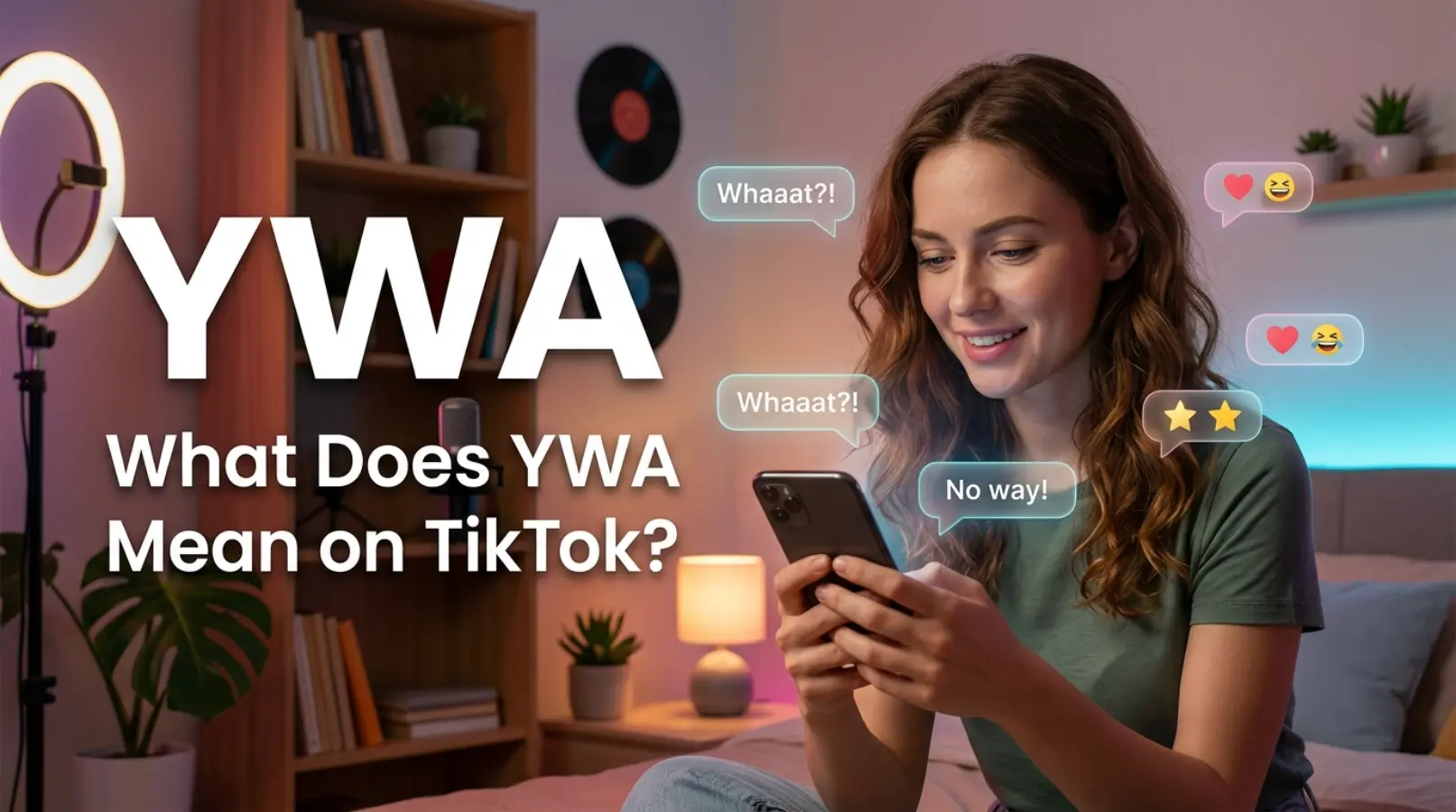
Here’s the short answer: YWA stands for “You’re Welcome Anyway.” It’s a slightly sarcastic, sometimes playful, sometimes genuinely polite way of saying “you’re welcome” when a thank-you never came — or when someone wants to add a little extra flavor to an otherwise boring response. On TikTok specifically, it’s become a go-to comment-section move, often dropped after someone drops useful info, a life hack, or a witty reply that got ignored.
This guide breaks down everything: the exact TikTok slang meaning of YWA, where it came from, how it’s used across Snapchat, Instagram, Discord, Reddit, gaming chats, texting, and even the workplace, real conversation examples, common mistakes, related abbreviations like WYA and YW, and how tone completely changes what YWA is really saying. By the end, you’ll never have to guess again.
Quick Answer: YWA Meaning at a Glance
YWA = “You’re Welcome Anyway.”
It’s used as a casual, often lightly sarcastic reply when:
- Someone helps another person and doesn’t get thanked
- A user wants to sound playful instead of formally polite
- A TikTok commenter answers a question and closes the loop with attitude
- Someone is teasing a friend who forgot basic manners
In rarer, more affectionate contexts, some users stretch YWA to mean “You’re Welcome Always,” which flips the tone from sarcastic to warm and reassuring. Context is everything — and we’ll show you exactly how to read it.
What Does YWA Mean on TikTok, Specifically?
TikTok culture runs on speed, humor, and shorthand. Full sentences slow down the scroll, so abbreviations like YWA thrive in the comment section, where brevity and wit matter more than grammar.
On TikTok, YWA usually appears in one of these three situations:
- After a helpful comment goes unacknowledged. Someone explains a recipe substitution, a phone setting, or a dance step in the comments. Nobody replies with “thanks.” A few hours later, that same commenter (or someone else) adds “YWA” as a cheeky follow-up.
- As a joke response to an ungrateful character in a skit. TikTok skits love dramatizing rude or oblivious people. A creator might caption a clip “when you help someone move and they don’t even say thanks… YWA” to summarize the whole vibe in three letters.
- In duet or stitch replies, where a second creator responds to the original poster with a sarcastic “YWA” to poke fun at a situation the original video set up.
The tone is almost always light — TikTok’s version of YWA leans into humor and relatability rather than genuine bitterness. It’s less “I’m actually annoyed” and more “we all know this feeling, let’s laugh about it.”
Real TikTok Comment Example
Original comment: “Wait how do you get the sound to sync like that on CapCut?” Reply: “Go to the audio tab, tap ‘auto sync,’ then adjust the offset slider. Takes 10 seconds.” (No response from the original commenter for two days.) Follow-up: “YWA 💀”
That’s the classic TikTok pattern: helpful info, silence, then a self-aware “YWA” to close the loop with a laugh instead of frustration.
The Origin and History of YWA
Slang like YWA doesn’t have a single inventor or an official launch date — it evolved the way most texting shorthand does: through repetition, convenience, and a bit of humor.
Here’s the general evolution:
- Step 1: “You’re welcome” gets shortened to “yw.” Typing full words in fast-moving chats felt unnecessary, so “yw” became common in texting and early instant messaging (AIM, MSN Messenger, then SMS).
- Step 2: People start adding sarcasm. When someone helped a friend and got zero acknowledgement, they’d type “yw” Anyway — and eventually started tacking on “Anyway” to make the sarcasm explicit: “you’re welcome Anyway.”
- Step 3: The phrase gets compressed into YWA. As with most internet slang, once a phrase becomes common enough, users shorten it further. “You’re welcome Anyway” became “YWA” somewhere in the broader wave of 2010s–2020s texting abbreviations.
- Step 4: TikTok and Snapchat popularize it for Gen Z. While YWA existed in texting culture before TikTok, the app’s comment-heavy, joke-driven format gave it new life. It spread through comment sections, duet replies, and relatable “POV” content about ungrateful friends or oblivious group chats.
This mirrors how abbreviations like “fr” (for real), “ngl” (not gonna lie), and “ong” (on god) developed — casual speech gets compressed for speed, then picked up by a platform’s community and turned into a recognizable inside joke.
The Two Main Meanings of YWA (Ranked by Popularity)
Most slang terms carry more than one shade of meaning depending on tone, platform, and relationship between the people texting. YWA is no exception.
1. “You’re Welcome Anyway” (Most Common — roughly 85–90% of usage)
This is the dominant, most widely recognized meaning. It’s used:
- Sarcastically, when someone doesn’t get thanked
- Jokingly, to poke fun at an awkward silence
- Passive-aggressively, in rare cases, when someone is genuinely a little annoyed
Example:
“I texted you the address three times and you still asked me again lol YWA”
2. “You’re Welcome Always” (Less Common, Warmer Tone)
A smaller but growing subset of users — especially in close friendships or romantic texting — use YWA to mean something closer to reassurance: you never have to thank me, I’ve got you no matter what.
Example:
“Thank you so much for helping me study for that exam” “YWA 🥹 anytime you need me”
The apostrophe-free compression makes both meanings look identical in text, so tone, emojis, and relationship context are the only real clues for which one someone means.
How to Tell Which Meaning Someone Intends
Since “YWA” reads the same whether it means “Anyway” or “always,” here’s a simple way to decode it:
| Clue | Likely Meaning |
| Sent right after being ignored or not thanked | “You’re Welcome Anyway” (sarcastic) |
| Sent with 💀😂🙄 emojis | “You’re Welcome Anyway” (playful/sarcastic) |
| Sent after genuine thanks, with 🥹❤️😊 | “You’re Welcome Always” (warm) |
| Used in a joking skit or meme caption | “You’re Welcome Anyway” |
| Used between close friends or partners without sarcasm cues | “You’re Welcome Always” |
| All lowercase, blunt, no punctuation | Usually sarcastic (“Anyway”) |
When in doubt, look at what happened right before the message. If someone was just ignored, it’s sarcasm. If someone was just thanked warmly, it’s affection.
YWA Across Different Platforms and Contexts

Slang doesn’t behave the same way everywhere. Here’s how YWA shows up across the platforms and situations where people actually use it.
YWA on TikTok
As covered above, TikTok’s version is comment-driven and humor-first. It shows up in:
- Reply chains under helpful comments
- Duet/stitch captions
- POV skits about rude or oblivious people
- Comment sections under “life hack” or tutorial-style videos
YWA on Snapchat
Snapchat conversations move fast and are usually between close friends, so YWA here tends to be more dramatic and playful than sincere. It often shows up in:
- Streak conversations where one friend reminds the other to snap back
- Group chats where someone gives advice that gets ignored
- Flirty back-and-forth texting, where it can slide into the “always” meaning
Example Snapchat exchange:
“omg thank you for reminding me about the streak 😭” “YWA, you’d lose it without me”
YWA on Instagram
On Instagram, YWA typically appears in:
- DMs, especially after sending someone a helpful link, recommendation, or reminder
- Comment replies under posts, similar to TikTok’s usage
- Story reply threads
It tends to be a little more restrained here than on Snapchat, since Instagram conversations often mix close friends with more casual followers.
YWA on Discord and in Gaming Chats
Gaming communities move at lightning speed, and players constantly help each other with tips, callouts, or item trades. YWA shows up when:
- A teammate explains a strategy and nobody says thanks before the next round starts
- Someone gives loot, currency, or an item in-game and the receiver logs off without a word
Example:
“bro just gave me his extra mats and left the server” “lol YWA I guess”
YWA on Reddit
Reddit’s text-heavy, often anonymous format means YWA appears less in casual banter and more in reply threads where someone answered a question in detail and got no acknowledgment, or received a downvote instead of a thank-you. It’s used with a dry, slightly self-deprecating humor that fits Reddit’s culture well.
YWA in Texting and Everyday Messaging
In plain SMS or iMessage conversations, YWA functions almost exactly like it does on social platforms — a shorthand reply to close out a “thanks” exchange, sometimes sincere, sometimes teasing.
YWA in Dating Conversations
In dating app chats or early relationship texting, YWA can carry a flirtier edge. Saying “YWA” after doing something thoughtful (like paying for coffee or giving a compliment) often reads as confident, low-key charm rather than sarcasm.
Example:
“you really didn’t have to pay for my drink” “YWA, i wanted to 🙂”
YWA in the Workplace
This one comes with a warning: YWA is not considered a professional language. In workplace Slack channels, emails, or internal messaging, using YWA — especially the sarcastic version — can come across as passive-aggressive or unprofessional, even if that’s not the intent. Stick to “you’re welcome,” “happy to help,” or “no problem” in work contexts, and save YWA for personal chats.
Common Mistakes People Make With YWA
Even once you know the meaning, it’s easy to misuse or misread YWA. Watch out for these:
- Reading it as genuinely rude when it’s meant as a joke. Most TikTok and Snapchat usage is playful, not hostile. Don’t assume someone is truly upset unless other context (like a serious tone earlier in the conversation) backs that up.
- Using it in professional settings. As noted above, it can land as passive-aggressive with coworkers, clients, or teachers.
- Confusing it with WYA (“where you at”). These two abbreviations look similar but mean completely different things — more on that below.
- Sending it without any emoji or context to someone who doesn’t know the abbreviation. Not everyone is fluent in internet slang; older relatives or new acquaintances might genuinely not understand it.
- Assuming it always means the same thing. As shown above, tone flips the meaning from sarcastic to sincere, so context always matters more than the letters themselves.
YWA vs. Similar Slang Terms
It helps to see YWA next to related abbreviations so you don’t mix them up.
| Term | Meaning | Typical Tone |
| YWA | You’re Welcome Anyway | Sarcastic, playful, or warm depending on context |
| YW | You’re Welcome | Neutral, straightforward |
| WYA | Where You At | Casual, used to ask someone’s location |
| NP | No Problem | Neutral, casual |
| IDC | I Don’t Care | Dismissive or relaxed |
| FR | For Real | Emphasis/agreement |
| NGL | Not Gonna Lie | Honesty marker |
| ONG | On God | Emphasis, sincerity |
The most common mix-up is YWA vs. WYA — they share three of the same letters but serve totally different purposes. YWA responds to gratitude (or lack of it); WYA asks where someone currently is. Mixing them up in a text can create genuine confusion, so it’s worth double-checking before you send.
Positive vs. Negative Connotations
YWA sits in an interesting gray zone because its tone depends entirely on delivery.
Positive/neutral connotations:
- Playful teasing between friends
- A warm, reassuring “always here for you” message
- Light humor in comment sections that doesn’t target anyone specifically
Negative connotations:
- Passive-aggressive jabs at someone who forgot to say thanks
- Sarcastic put-downs in arguments
- Workplace or formal use, where it can seem dismissive or unprofessional
Because the same three letters can swing between “I adore you” and “wow, rude,” it’s one of those terms best reserved for people who already know your texting style well.
Why YWA Matters: Cultural Relevance and Modern Trends
Slang like YWA isn’t just a random abbreviation — it reflects broader trends in how younger generations communicate online:
- Speed over formality. Gen Z and younger Millennials favor quick, compressed language that keeps conversations moving, especially in comment sections where attention spans are short.
- Humor as a communication tool. Rather than expressing genuine annoyance directly, many users default to sarcasm and self-aware jokes, which softens potentially awkward social moments (like being ignored after helping someone).
- Platform-specific dialects. The same abbreviation can carry slightly different weight on TikTok versus Snapchat versus Discord, showing how each platform’s culture shapes language differently.
- Longevity through relatability. Unlike some slang that disappears within months, YWA has stuck around because the situation it describes — helping someone and not getting thanked — is universally relatable and keeps generating new jokes, memes, and reaction content.
As of 2026, YWA is considered a fairly established piece of internet vocabulary. It’s not as dominant as terms like “fr fr” or “no cap,” but it remains a recognizable, frequently used abbreviation, especially in comment-based interactions.
Summary Table: YWA Meaning, Origin, and Usage
| Category | Details |
| Full Meaning | “You’re Welcome Anyway” (primary); “You’re Welcome Always” (secondary, less common) |
| Origin | Evolved from the shortened “yw” (“you’re welcome”), later expanded with “Anyway” for sarcasm, then compressed again |
| Primary Platforms | TikTok, Snapchat, Instagram, texting, Discord, gaming chats, Reddit |
| Tone | Ranges from sarcastic/playful to warm/sincere, depending on context |
| Popularity (2026) | Moderately popular; more niche than “fr” or “lol” but widely recognized |
| Best Used In | Casual conversations with friends, comment sections, texting |
| Avoid Using In | Professional emails, workplace chats, formal messages |
| Related Terms | YW, WYA, NP, FR, NGL, ONG |
| Common Mistake | Confusing YWA with WYA (“where you at”) |
Frequently Asked Questions About YWA
Is YWA always sarcastic?
No. While sarcasm is the most common use, YWA can also be sincere — especially between close friends or partners who use it to mean “you’re welcome always, no need to thank me.”
Is it rude to send someone “YWA”?
Not inherently. Among friends who understand internet slang, it usually reads as playful teasing rather than genuine rudeness. It only becomes potentially rude if paired with a harsh tone earlier in the conversation or sent to someone who might not know the abbreviation.
What’s the difference between YWA and YW?
“YW” is a straightforward, neutral “you’re welcome.” “YWA” adds “Anyway,” which introduces sarcasm or emphasis, usually implying the person wasn’t properly thanked in the first place.
Does YWA mean the same thing on every platform?
The core meaning stays consistent, but the tone can shift slightly. TikTok and Discord usage tends to lean more humorous and public (comment sections, group chats), while Snapchat and texting usage can feel more personal and sometimes sincere.
Can I use YWA with someone I don’t know well?
It’s generally safer to stick with “you’re welcome” or “no problem” with people you don’t know well, since they might not recognize the abbreviation or could misread the tone as sarcastic or dismissive.
Is YWA appropriate for work emails or professional messages?
No. YWA is casual internet slang and can come across as unprofessional or passive-aggressive in a workplace setting. Use full, polite phrasing like “happy to help” or “you’re welcome” instead.
Where did YWA come from originally?
It grew out of the widely used “yw” abbreviation for “you’re welcome,” which people eventually expanded with “Anyway” to add a sarcastic edge when a thank-you didn’t come. Over time, the full phrase got compressed into the three-letter “YWA.”
Is YWA the same as WYA?
No, and this is a common mix-up. WYA stands for “where you at” and is used to ask someone’s location, while YWA responds to thanks (or the absence of it). They look similar but mean completely different things.
Conclusion
At its core, YWA means “You’re Welcome Anyway” — a short, often sarcastic or humorous way of acknowledging that someone helped out and didn’t get properly thanked. On TikTok, it lives mostly in comment sections, duet replies, and relatable skit captions, where it captures a universal, slightly funny frustration in just three letters. In closer friendships or more affectionate contexts, it can shift to mean “You’re Welcome Always,” turning a sarcastic jab into a warm reassurance.
The key to using and reading YWA correctly comes down to context: who’s sending it, what happened right before, and whether emojis or tone soften or sharpen the message. Use it freely with friends who get the joke, but steer clear of it in professional or unfamiliar conversations where the sarcasm might not land the way you intend.
Now that you know exactly what YWA means — on TikTok, Snapchat, Discord, texting, and beyond — you’ll never have to pause and wonder again. And the next time someone helps you out, maybe skip the awkward silence and just say thanks.

Basra Kamal is a content writer and researcher at Top Meaning, specializing in word meanings, abbreviations, internet slang, texting terms, and modern language trends. She is passionate about making complex words and online expressions easy to understand through clear, accurate, and well-researched content. Her work helps readers quickly find reliable explanations of popular terms, phrases, and acronyms used in everyday communication and digital culture.