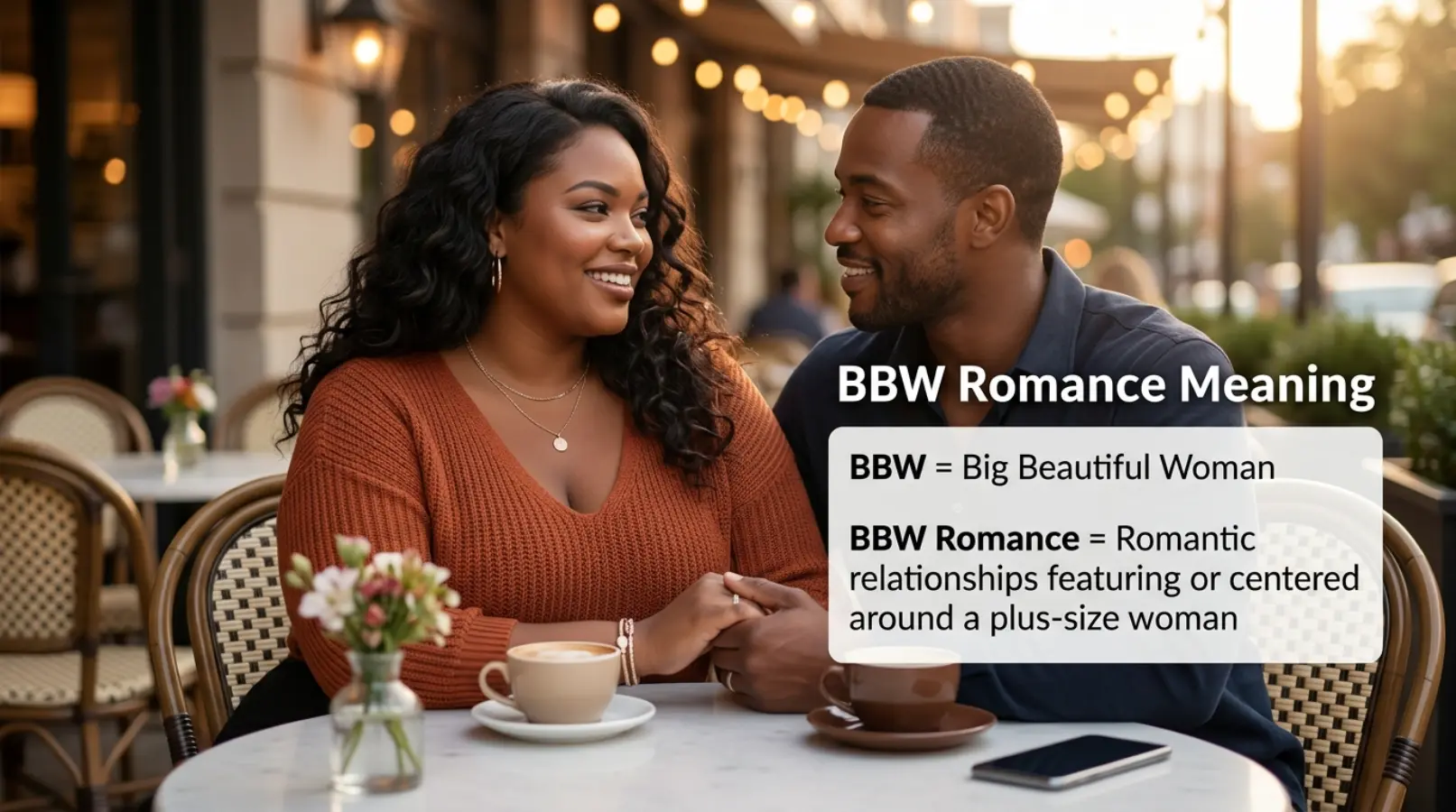
You’ve probably seen it tucked into a book title or a genre tag: (BBW Romance). Maybe you scrolled past it on a retailer page, saw it trending on BookTok, or noticed it in a genre dropdown menu and had no idea what it meant. You’re not alone — this is one of the most frequently searched abbreviations in the romance reading community.
The short answer: BBW romance stands for “Big Beautiful Woman” romance. This romance subgenre features a plus-size or larger-bodied woman as the heroine and celebrates her body as part of her identity rather than treating it as something she needs to change or apologize for.
This guide breaks down exactly what BBW romance meaning covers, where the term came from, how it’s used across bookstores, apps, and social platforms like BookTok and Instagram, common misconceptions, and how it compares to other romance genre labels you’ll see alongside it. By the end, you’ll be able to spot a BBW romance tag and know exactly what kind of story you’re getting.
Quick Answer: What Does BBW Romance Mean?
BBW stands for “Big Beautiful Woman.” In romance fiction, a BBW romance is a story where the main female character — the heroine — is plus-size, curvy, or larger-bodied, and the narrative centers her as a fully realized romantic lead rather than a side character or a punchline.
The term shows up as a genre tag or label, most often in:
- Book titles and subtitles, sometimes in parentheses like “(BBW Romance)”
- Genre categories on ebook retailers and library apps
- Hashtags on BookTok and Bookstagram
- Author bios and series descriptions
It’s a descriptive category, similar to how “enemies to lovers” or “small town romance” describes a type of story — except BBW romance describes the heroine’s body type rather than the plot structure.
Where the Term BBW Romance Came From
The abbreviation BBW predates its use in romance publishing by a fair amount. It started circulating online in the 1990s and early 2000s as shorthand for “Big Beautiful Woman,” used in various online communities as a reclaiming term — a way for plus-size women to describe themselves with confidence rather than the more clinical or judgmental language often used elsewhere.
As the term spread, romance publishing picked it up, particularly in the self-published and indie ebook space, where genre tags and keywords help readers filter for exactly the kind of story they want. Authors and publishers started using “BBW” the same way they used other body-type or relationship-type descriptors — as a quick, searchable way to signal what kind of heroine a book features.
Over the past decade, the term has grown alongside a broader shift in romance publishing toward body diversity and body positivity. Traditional romance covers and blurbs spent decades defaulting to a narrow body type for heroines. BBW romance emerged, in part, as a direct response to that gap — giving plus-size readers stories where a heroine who looks like them gets the love story, not just the sidekick role.
What Makes a Romance Book “BBW”?
A book earns the BBW label primarily because the heroine has a plus-size or larger body, and the story acknowledges her body as an important part of her identity rather than ignoring or hiding it.
Beyond that baseline, BBW romances vary widely in tone, heat level, and plot. You’ll find BBW romance in nearly every romance subcategory:
- Contemporary BBW romance — modern-day settings, everyday careers, realistic relationship arcs
- BBW billionaire romance — a wealthy love interest paired with a plus-size heroine
- Paranormal BBW romance — shifters, vampires, or fantasy elements layered onto the genre
- Sweet or “clean” BBW romance — little to no explicit content, focused on emotional connection
- BBW erotica or steamy romance — higher heat level, more explicit scenes
This is actually one of the most common points of confusion for new readers: BBW describes the heroine’s body type, not the heat level of the book. A BBW romance can be a sweet, closed-door story just as easily as it can be a steamy one. The genre tag tells you about the character, not automatically about the content level — you’ll still want to check the book’s individual description or additional tags (like “steamy” or “sweet”) to know what to expect there.
Common Misconceptions About BBW Romance
A few misunderstandings come up often enough that they’re worth addressing directly.
Misconception: BBW automatically means the book is explicit. Not true. Heat level is a separate category from body type. Plenty of BBW romances are entirely closed-door or “sweet,” while others are more explicit — just like any other romance subgenre.
Misconception: BBW romance is only about the heroine’s size, with no real plot. This criticism has been raised by some readers and reviewers, and it can be fair for a specific book, but it’s not true of the category as a whole. Many BBW romances follow the same plot structures as mainstream romance — enemies to lovers, second chance romance, small town settings — with a plus-size heroine at the center rather than a focus purely on her body.
Misconception: BBW is an outdated or offensive term. Within the romance reading and writing community, BBW is generally understood as a reclaimed, descriptive term rather than an insult. That said, individual readers have different comfort levels with any body-related label, and some prefer terms like “plus-size romance” or “curvy heroine” instead. Both describe similar territory.
Misconception: BBW only applies to a specific, narrow size range. In practice, the label gets used broadly — from heroines who are simply curvier than a “standard” romance lead to heroines who are significantly larger. There’s no strict size cutoff that defines the category.
BBW Romance vs. Similar Romance Genre Terms
BBW often appears alongside other genre shorthand, and it’s easy to mix them up if you’re new to romance genre tags. Here’s how the most commonly confused terms differ:
| Term | Meaning | Focus |
| BBW Romance | Big Beautiful Woman romance | Heroine’s body type (plus-size) |
| BWWM | Black Woman, White Man | Interracial pairing between a Black heroine and white hero |
| MMC / FMC | Male Main Character / Female Main Character | General shorthand for the leads, not body-specific |
| Curvy Romance | Similar to BBW, sometimes used interchangeably | Heroine’s body type, often used as a softer alternative label |
| Plus-Size Romance | Broader umbrella term | Same general focus as BBW, more commonly used in mainstream (non-indie) publishing |
BBW and “curvy romance” or “plus-size romance” overlap heavily and are often used interchangeably by readers, though “BBW” tends to be more common in indie and self-published circles, while “plus-size romance” shows up more often in traditional publishing and mainstream media coverage.
How BBW Romance Shows Up Across Platforms
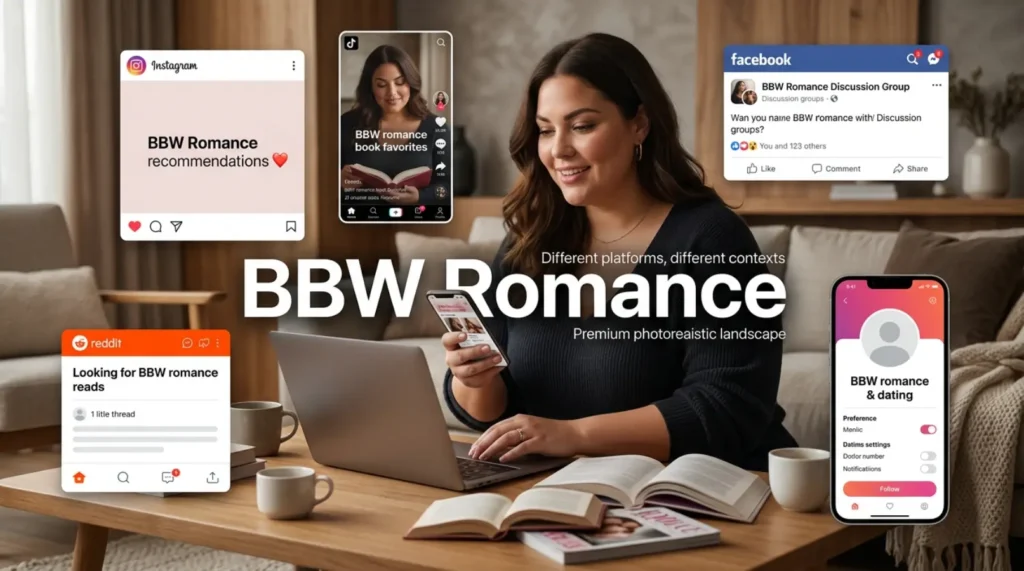
The term isn’t limited to book covers — it circulates across several platforms where romance readers gather.
Ebook Retailers and Library Apps
Amazon, Kindle Unlimited, and library apps like Libby often include BBW as a searchable genre tag or keyword, letting readers filter specifically for plus-size heroine romances.
BookTok and Bookstagram
On TikTok and Instagram, hashtags like #BBWRomance or #CurvyRomance help readers find recommendations and connect with others looking for body-diverse romance leads. Creators often build entire content series around recommending BBW romance titles.
Goodreads and Reader Communities
Goodreads shelves and reader-created lists frequently use “BBW” as a tagging category, helping readers track and discover books that fit the description.
Author Marketing and Series Branding
Many indie romance authors build entire series or pen names around BBW romance specifically, using the term directly in series titles or author bios to signal their focus to readers searching for this type of story.
Why BBW Romance Matters to Readers
For a lot of readers, BBW romance fills a gap that mainstream romance publishing left open for a long time. Romance as a genre is built on wish fulfillment and emotional connection — readers want to see themselves, or someone like them, get the love story. When cover art and blurbs default almost exclusively to one narrow body type, plus-size readers can end up feeling like the genre wasn’t built with them in mind.
BBW romance directly addresses that. It gives plus-size heroines the full romantic arc — the swoony love interest, the happily-ever-after, the central role in the story — without her size being treated as a problem to solve before she “deserves” love. That framing matters to a lot of readers, and it’s a big part of why the subgenre has grown steadily, especially in the self-published and indie romance space where niche categories can thrive.
Tone and Reception
BBW romance carries a generally positive, body-affirming tone within the romance reading community. It’s associated with body positivity and inclusive representation, and most readers and authors who use the term do so intentionally, as a way to signal “this heroine looks like real women, not just one narrow body type.”
That said, like most genre labels tied to identity or body type, reception isn’t universal. Some readers and critics have raised valid points about certain BBW romances leaning too heavily on the heroine’s insecurities about her body as a plot device, rather than treating her size as simply one part of a fully developed character. This criticism has pushed many newer BBW romance authors toward writing heroines whose confidence and personality drive the story, with body image as one thread among many rather than the entire plot.
Common Mistakes People Make With the Term
- Assuming BBW automatically signals an explicit book. Heat level is a separate tag entirely — check the book’s individual description for that information.
- Confusing BBW with BWWM. They look similar as acronyms but describe completely different things — one is about body type, the other about an interracial pairing.
- Assuming all BBW romances follow the same plot. Like any subgenre, BBW romance spans nearly every trope and setting in the broader romance category.
- Treating the term as a strict, universally agreed-upon size definition. In practice, it’s used broadly and inconsistently across different authors and platforms.
- Assuming the term is universally preferred by all plus-size readers. Some readers prefer alternative terms like “curvy” or “plus-size,” so it’s worth being aware both terms circulate for similar content.
Quick Reference Summary Table
| Category | Details |
| Term | BBW Romance |
| Stands for | “Big Beautiful Woman” Romance |
| Meaning | A romance subgenre featuring a plus-size or larger-bodied heroine |
| Origin | Term originated online in the 1990s–2000s as a body-positive, reclaimed descriptor, later adopted by romance publishing, especially indie/self-published authors |
| Common usage | Book titles, genre tags, retailer categories, BookTok/Bookstagram hashtags |
| Tone | Generally positive and body-affirming; some nuanced criticism exists |
| Popularity | Well-established in indie romance publishing; widely recognized among romance readers |
| Related terms | Plus-size romance, curvy romance, BWWM, MMC/FMC |
| Key clarification | Describes body type, not heat level or explicit content |
Frequently Asked Questions
What does BBW mean in a romance book title? BBW stands for “Big Beautiful Woman,” indicating the heroine is plus-size or larger-bodied. It’s used as a genre tag to help readers find romances with this type of lead character.
Is BBW romance always explicit or steamy? No. BBW describes the heroine’s body type, not the book’s heat level. BBW romances range from sweet, closed-door stories to more explicit ones, just like any other romance subgenre.
Is “BBW romance” the same as “plus-size romance”? They’re very similar and often used interchangeably. “BBW” tends to appear more in indie and self-published romance, while “plus-size romance” is more common in mainstream publishing and media coverage.
Where did the term BBW come from? It started as internet shorthand in the 1990s and early 2000s, used as a body-positive, reclaimed term before romance publishing adopted it as a genre descriptor.
Is BBW romance considered a body-positive genre? Generally, yes. Many readers and authors see it as a way to center plus-size women as full romantic leads, though some individual books have faced criticism for over-focusing on body insecurity as a plot device.
What’s the difference between BBW and BWWM in romance? BBW refers to the heroine’s body type (plus-size), while BWWM refers to an interracial pairing between a Black heroine and a white hero. They describe entirely different things despite the similar-looking acronyms.
Do all romance retailers use the BBW tag? Most major ebook retailers and reader platforms, including Amazon, Kindle Unlimited, and Goodreads, support BBW as a searchable genre tag or shelf category, though not every book uses the label explicitly.
Final Takeaway
BBW romance meaning, at its core, is simple: it’s a romance subgenre built around a plus-size or larger-bodied heroine getting the full romantic arc — the connection, the tension, the happily-ever-after — without her body being treated as an obstacle to overcome first. The term has roots in body-positive online culture and has become a well-established genre tag across indie publishing, ebook retailers, and reader communities like BookTok and Goodreads.
If you’re browsing for your next read and spot the BBW tag, know that it’s telling you about the heroine’s body type — not the heat level, not the plot, and not the quality of the writing. Check the individual book’s description for those details, and you’ll have everything you need to pick a story that fits exactly what you’re looking for.

Basra Kamal is a content writer and researcher at Top Meaning, specializing in word meanings, abbreviations, internet slang, texting terms, and modern language trends. She is passionate about making complex words and online expressions easy to understand through clear, accurate, and well-researched content. Her work helps readers quickly find reliable explanations of popular terms, phrases, and acronyms used in everyday communication and digital culture.






1 thought on “BBW Romance Meaning: What This Book Genre Term Actually Stands For”