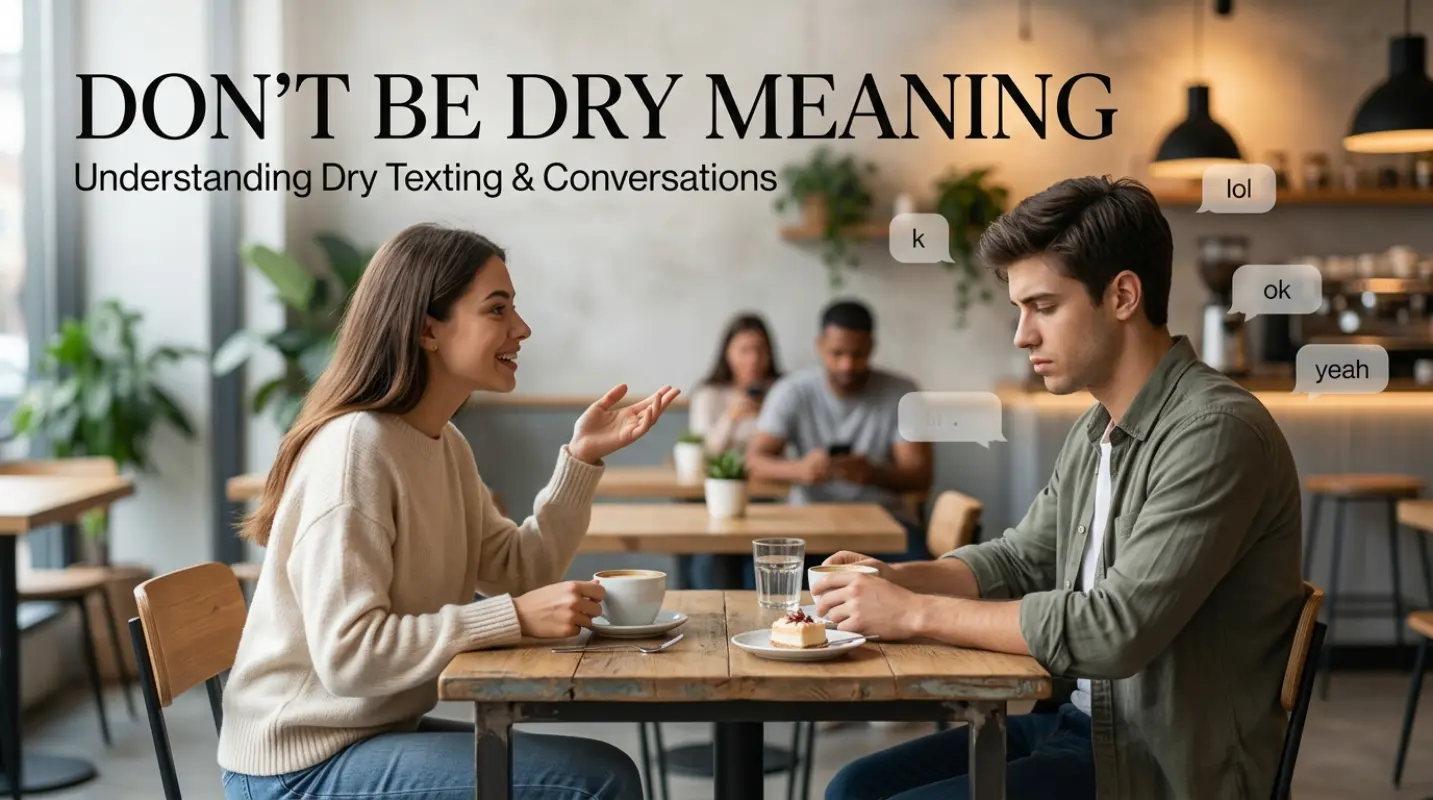
You sent a thoughtful text, and all you got back was “k.” Or maybe a friend told you, half-joking, half-serious, “don’t be dry.” If you’ve ever paused wondering what that actually meant, you’re not alone. So, what is the real “don’t be dry” meaning?
The short answer: it means don’t be boring, low-effort, or emotionally flat in a conversation. Being called “dry” has nothing to do with weather or thirst, it’s about dry texting, a modern way of describing short, lifeless replies that kill the flow of a conversation. When someone says “don’t be dry,” they’re asking you to bring more energy, more curiosity, and more warmth to how you communicate.
This term matters because it shows up constantly in texting, dating apps, and group chats, and misunderstanding it can genuinely hurt a friendship or a budding romance. Nobody wants to be labeled “the dry texter” without realizing it.
In this guide, we’ll break down the full “don’t be dry” meaning, its origin, how it shows up across texting, dating, Snapchat, Discord, and everyday conversation, real examples, common mistakes, and how to avoid being dry yourself. By the end, you’ll never wonder what “don’t be dry” means again.
“Don’t Be Dry” Meaning: A Quick Definition
At its core, “don’t be dry” is a request, sometimes playful, sometimes pointed, to stop giving flat, low-effort, or emotionally distant responses in a conversation. It’s directly tied to the slang term “dry,” used as an adjective to describe a person’s communication style, particularly over text.
Being “dry” typically involves:
- Giving short, one-word replies like “k,” “lol,” or “fine”
- Not asking follow-up questions
- Showing little to no enthusiasm or emotion
- Making the other person feel like they’re carrying the entire conversation
- Responding late or inconsistently without explanation
So when someone says “don’t be dry,” they’re really saying: put in more effort, show some interest, and stop making this conversation feel one-sided.
The Origin and History Behind “Don’t Be Dry”
To understand why this phrase carries so much weight today, it helps to look at where “dry” as slang actually came from.
The Literal Roots of “Dry”
Long before texting existed, “dry” already carried a figurative meaning in English. Dictionaries have long recognized “dry” as a description for something lacking adornment, emotion, or warmth, as in “dry humor” or “a dry lecture.” That foundation, dry meaning emotionally flat or uninteresting, laid the groundwork for how the word would later apply to texting.
The Shift to Texting Culture
As texting became the dominant form of everyday communication in the 2000s and 2010s, people needed a quick way to describe conversations that felt effortless or emotionally absent. “Dry texting” emerged as the perfect fit, borrowing that same “lacking warmth” quality and applying it directly to short, unenthusiastic replies.
Growth Through Dating Culture
The phrase gained significant traction within dating and relationship culture, especially as texting became the primary way people got to know potential partners before meeting in person. Getting one-word replies from someone you’re interested in became a common frustration, and “dry texting” became the go-to term to describe it.
Mainstream Social Media Adoption
By the 2010s and into the 2020s, “dry” and “don’t be dry” spread widely across social media, group chats, and dating apps. It became especially common advice given between friends, warning someone not to come across as boring or uninterested when texting a crush or a new match.
The Different Meanings of “Dry” (In Order of Popularity)
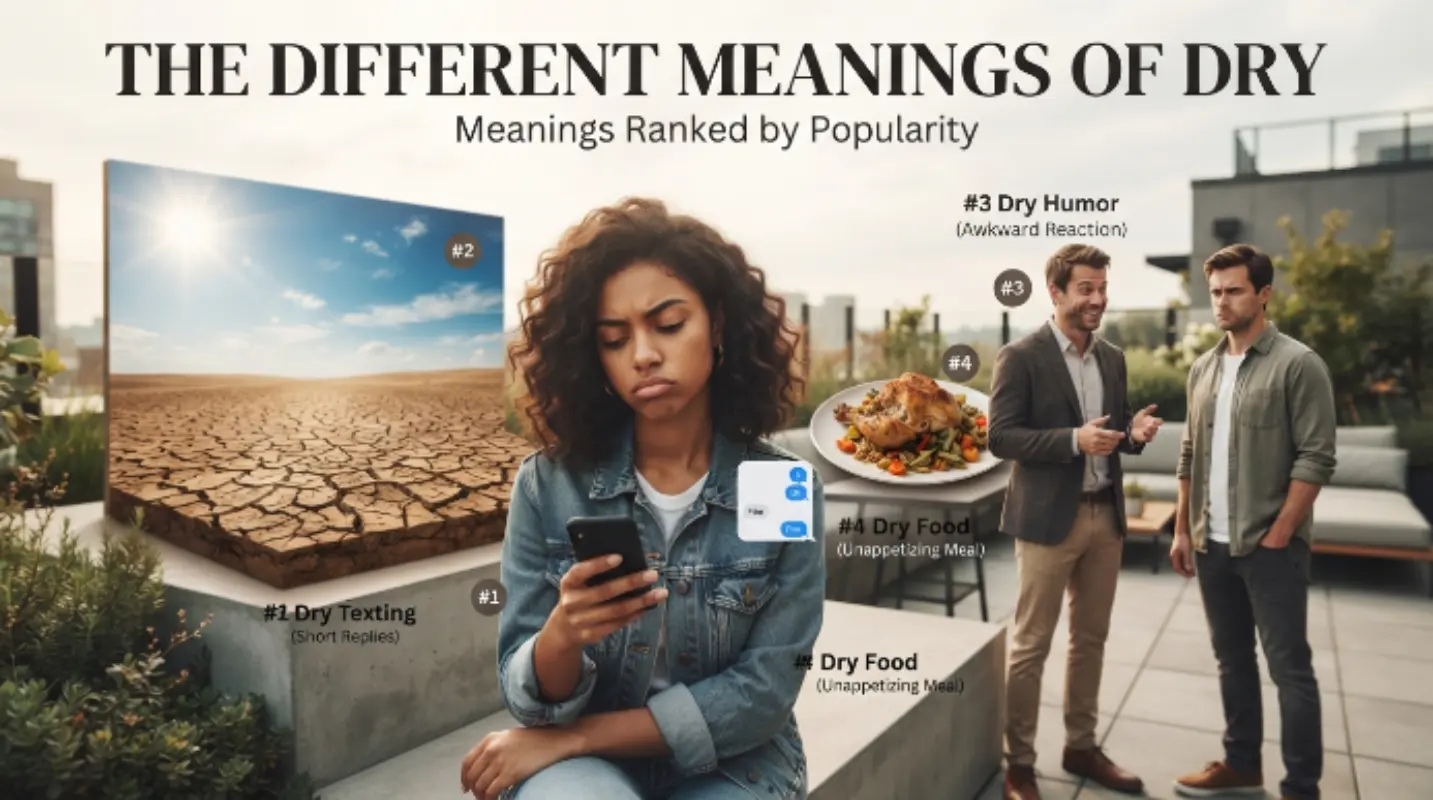
While “boring or low-effort in conversation” is by far the dominant meaning, a few other uses of “dry” exist depending on context. Here’s a breakdown, ranked from most to least common.
1. Boring or Low-Effort in Conversation (Most Common)
This is the meaning almost everyone intends when they say “don’t be dry” in a text or chat.
Example: “Bro, don’t be dry, ask me a question back sometimes.”
2. Deadpan or Understated Humor
In a slightly different context, “dry” can describe a specific style of humor, delivered flatly and seriously despite being funny. This is often called “dry humor” or “deadpan” delivery, and it’s actually a compliment rather than a criticism.
Example: “His dry humor gets me every time, he says the funniest things with a straight face.”
3. Lacking Sugar or Sweetness (Wine and Drinks)
In an entirely unrelated context, “dry” describes drinks, especially wine, that contain low residual sugar. This meaning has nothing to do with texting slang.
Example: “I prefer a dry red wine over something sweet.”
4. Alcohol Prohibition Context
“Dry” can also describe an area, event, or state where alcohol is banned or restricted, such as a “dry county” or “dry wedding.” This is a formal, well-established meaning unrelated to texting culture.
Example: “It’s a dry campus, no alcohol allowed.”
Outside of humor, drinks, or prohibition contexts, if you see “don’t be dry” in a text or online chat, it overwhelmingly refers to boring or low-effort communication.
“Don’t Be Dry” Meaning Across Different Platforms
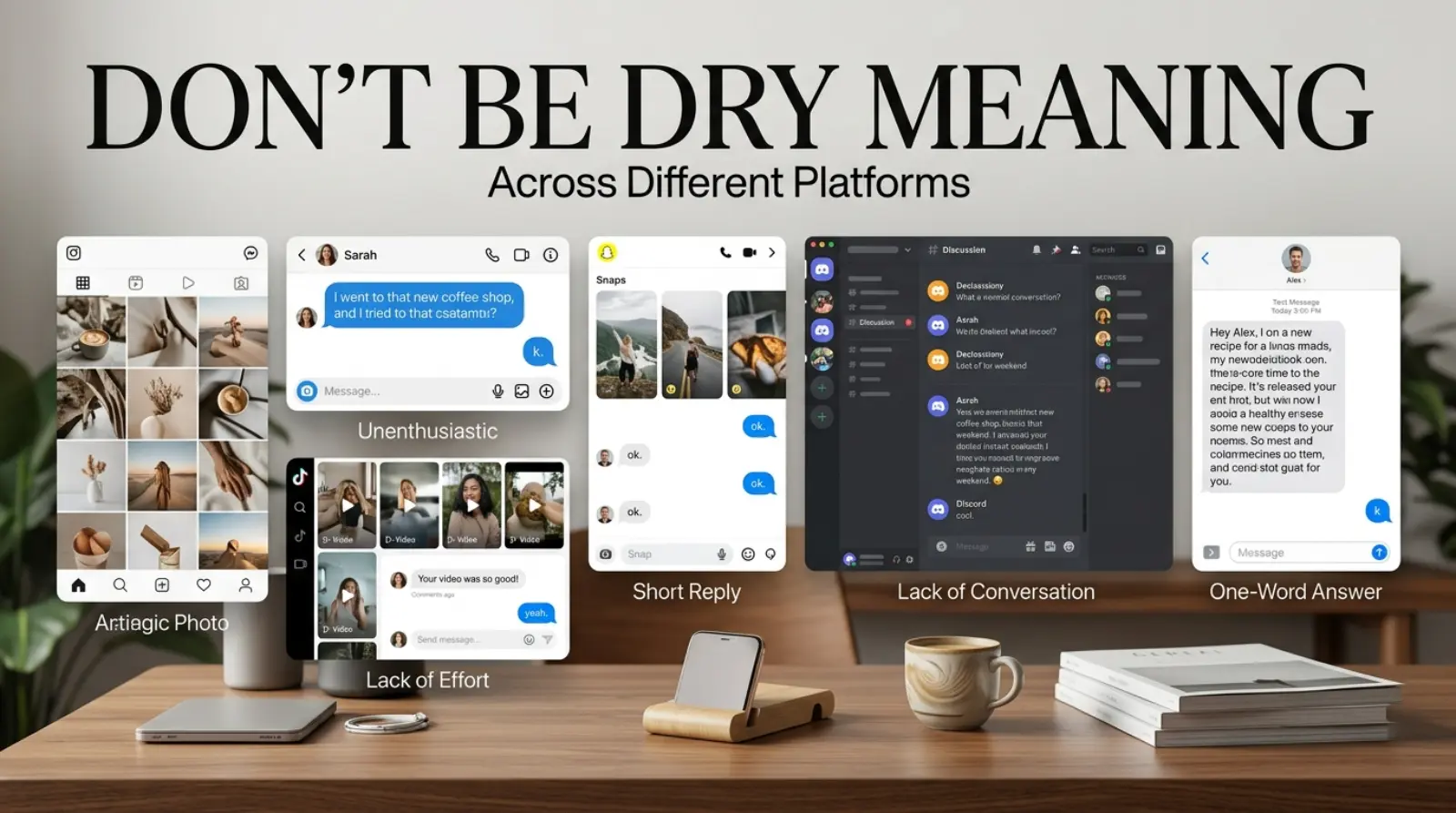
Context and platform shape how this phrase typically shows up. Here’s how it appears across popular apps and situations.
“Don’t Be Dry” in Text Messages
In regular texting, this phrase usually calls out short, flat replies and encourages the other person to engage more genuinely.
“Don’t Be Dry” on TikTok
On TikTok, dry texting is a popular topic for relationship and dating content, with creators making videos about how to identify and avoid dry texters.
“Don’t Be Dry” on Instagram
Instagram comments and DMs often use “dry” playfully, teasing a friend for a boring caption or a flat response in the comments.
“Don’t Be Dry” on Snapchat
Snapchat is one of the most common places to see this phrase, since quick, casual back-and-forth chats make dry responses especially noticeable.
“Don’t Be Dry” on Discord
In Discord servers, “don’t be dry” often gets used jokingly among friends when someone gives a short, unenthusiastic reply in a group conversation.
“Don’t Be Dry” on Reddit
Reddit threads about dating and texting frequently discuss dry texting, with users sharing stories and asking for advice on how to handle a dry texter.
“Don’t Be Dry” in Gaming Chat
In gaming voice or text chats, “don’t be dry” might call out a teammate for giving flat, low-energy responses during a match or conversation.
“Don’t Be Dry” in Dating Conversations
This is where the phrase shows up most seriously. In dating, being labeled “dry” can genuinely hurt someone’s chances, since it signals disinterest or low effort to a potential partner.
“Don’t Be Dry” in Workplace Conversations
As casual slang, this phrase has no place in professional communication. However, the underlying concept, engaging thoughtfully rather than giving flat responses, still applies informally to workplace chat culture.
Real Conversation Examples
Seeing “don’t be dry” in real conversations makes the meaning much clearer.
Example 1 (Calling out flat replies):
“How was your weekend?” “fine.” “Don’t be dry, tell me something!”
Example 2 (Dating context):
“He just texts back ‘lol’ to everything I send.” “Yeah, that’s definitely dry texting.”
Example 3 (Playful teasing among friends):
“k” “Don’t be dry 😂 give me more than that.”
Example 4 (Positive use, deadpan humor):
“He has such dry humor, I never know if he’s joking.”
“Don’t Be Dry” vs. Similar Expressions: Comparison Table
| Term | Meaning | Common Tone | Positive or Negative? |
| Don’t Be Dry | Stop giving flat, low-effort responses | Playful to frustrated | Negative (in texting context) |
| Dry Humor | Deadpan, understated comedic style | Witty, subtle | Positive |
| Left on Read | Message seen but not replied to | Frustrated, confused | Negative |
| One-Word Texter | Someone who replies briefly, without elaboration | Neutral to negative | Negative |
| Hard to Read | Someone whose intentions or feelings are unclear | Curious, uncertain | Neutral |
The key difference is that “dry” specifically targets effort and warmth, not just brevity. A short reply isn’t automatically dry if it still shows genuine engagement or enthusiasm.
Common Mistakes People Make With “Don’t Be Dry”
Even frequent texters misunderstand or misuse this phrase sometimes. Here are the most common slip-ups.
- Assuming short replies always mean disinterest. Sometimes people are just busy, not intentionally being dry.
- Confusing dry texting with dry humor. These are two completely different, almost opposite, uses of the same word.
- Using it too harshly with someone unfamiliar with the term. It can come across as an unfair judgment rather than lighthearted feedback.
- Not recognizing your own dry texting habits. Many people don’t realize their replies read as flat until someone points it out.
- Ignoring context. Someone might seem dry over text but be warm and engaged in person, texting style doesn’t always reflect personality.
Positive and Negative Connotations
Like most texting slang, the tone behind “don’t be dry” depends heavily on context and relationship.
Positive or playful connotations:
- Light teasing between close friends
- A gentle nudge to bring more energy to a conversation
- Encouraging someone to open up and share more
Negative connotations:
- A genuine criticism that can hurt feelings, especially in dating
- A sign of frustration in an already strained relationship
- Feeling judged for a communication style that may be unintentional
Misconceptions About “Don’t Be Dry”
Let’s clear up a few common myths.
- Myth: Being dry always means someone doesn’t care. Sometimes people are simply busy, tired, or just not naturally expressive over text.
- Myth: Dry texting and dry humor are the same thing. They’re actually quite different, one criticizes low effort, the other praises clever, deadpan wit.
- Myth: Only romantic interests get called dry. Friends, family members, and even coworkers can be described as dry texters too.
- Myth: “Don’t be dry” is always an insult. It’s often said playfully, as a lighthearted push rather than a serious criticism.
Cultural Relevance and Modern Trends
The rise of “don’t be dry” reflects a broader shift in how much value modern communication places on texting as a relationship-building tool. Before meeting in person becomes the norm, texting style often shapes someone’s entire first impression, making phrases like “don’t be dry” carry real social weight.
This trend has been amplified by dating content creators and relationship influencers on TikTok and Instagram, who frequently discuss dry texting as a dealbreaker or red flag. What started as simple slang has become a genuine talking point in modern dating advice, with countless videos and articles dedicated to helping people avoid, or stop being, a dry texter.
Summary Table: “Don’t Be Dry” Meaning Key Facts
| Category | Details |
| Primary Meaning | Stop giving boring, low-effort, or emotionally flat responses |
| Origin | Rooted in the older meaning of “dry” as lacking warmth or emotion |
| Popularized Through | Texting culture, dating apps, and social media in the 2010s–2020s |
| Other Meanings | Dry humor (positive), dry wine, dry counties/events |
| Common Platforms | Texting, TikTok, Snapchat, Instagram, Discord, dating apps |
| Tone | Playful to genuinely critical, depending on relationship |
| Related Terms | Dry humor, left on read, one-word texter |
| Workplace Appropriate? | No, as slang |
Frequently Asked Questions
What does “don’t be dry” mean in texting?
It means don’t give short, boring, or emotionally flat responses. It’s a request to show more effort, curiosity, and warmth in a conversation.
Is being called “dry” a bad thing?
In a texting or dating context, yes, it’s generally seen as a criticism. However, “dry humor” is a positive term describing clever, deadpan comedy.
How do I stop being a dry texter?
Ask follow-up questions, show genuine interest, and avoid one-word replies like “k” or “lol” without any elaboration or enthusiasm.
Does dry texting mean someone doesn’t like you?
Not always. Some people are naturally less expressive over text, even if they’re genuinely interested or care about the conversation in person.
What’s the difference between dry texting and being busy?
Dry texting is a consistent pattern of flat, low-effort replies, while being busy is usually a temporary delay or shorter response due to circumstances.
Can dry texting hurt a relationship?
Yes. Especially in dating, consistently dry texting can create the impression of disinterest, even if that’s not the sender’s intention.
Is “don’t be dry” used the same way across all platforms?
The core meaning stays consistent, but tone can shift. It’s often playful among friends on Snapchat or Discord, but more serious in dating conversations.
What’s a good response if someone tells me not to be dry?
Try engaging more actively, ask them a question back, share more detail, or add some personality to your replies to shift the conversation’s energy.
Conclusion
So, what is the real “don’t be dry” meaning? At its core, it’s a call to bring more warmth, effort, and genuine engagement into a conversation, especially over text. Rooted in the older meaning of “dry” as lacking emotion, the phrase has grown into a widely recognized piece of texting and dating slang.
The key takeaway: context matters. Whether it’s playful teasing between friends or genuine feedback from someone you’re dating, “don’t be dry” is ultimately about connection, showing the other person that you’re actually invested in the conversation.
Now that you understand where this phrase came from and how it’s used, you’ll never have to wonder what someone means the next time they tell you not to be dry.

Basra Kamal is a content writer and researcher at Top Meaning, specializing in word meanings, abbreviations, internet slang, texting terms, and modern language trends. She is passionate about making complex words and online expressions easy to understand through clear, accurate, and well-researched content. Her work helps readers quickly find reliable explanations of popular terms, phrases, and acronyms used in everyday communication and digital culture.




1 thought on ““Don’t Be Dry” Meaning: What It Really Means in Texting and Slang”